Log in


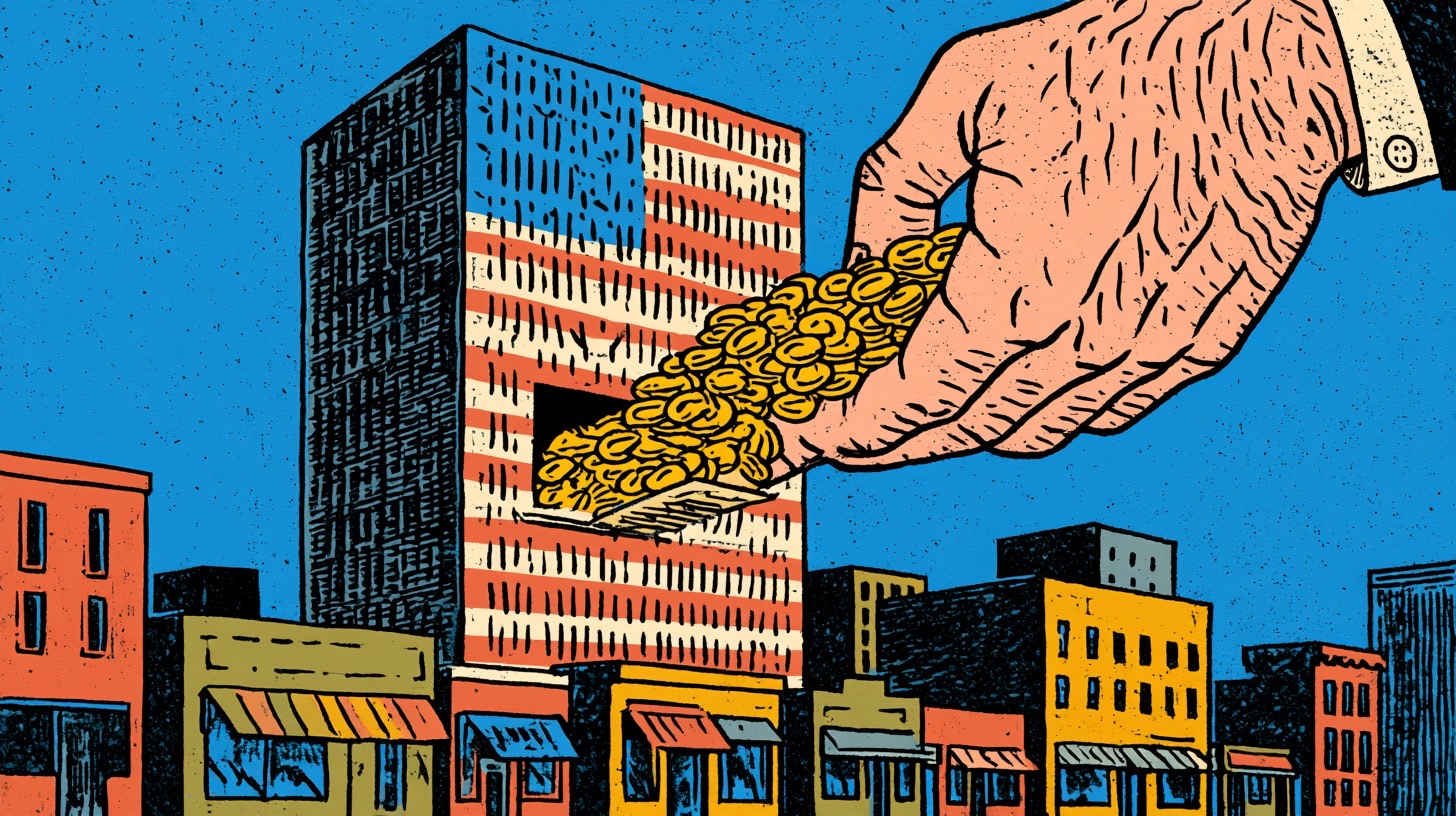
Words have specific meanings. Unfortunately, capitalism is frequently misused by supporters and critics alike. Too often, what people defend or condemn is not free-market capitalism at all.
Although distinctions exist among capitalism, free enterprise, and free market, for the purposes of this essay, I use capitalism to mean free-market capitalism: an economic system based on private property, voluntary exchange, competition, freedom of entry and association, and freedom of contract—including wages negotiated without government-imposed minimums. Government’s role is that of a referee: protecting property rights, enforcing contracts, and preventing force and fraud, not granting subsidies, bailouts, or special privileges.
Consider Michael Moore’s Capitalism: A Love Story (2009) and Robert Reich’s Saving Capitalism (2017). Both criticize corporate power, political influence, and government favors for large businesses. On corporate welfare, I agree with their criticisms on economic and moral grounds. Why should taxpayers subsidize businesses they might never voluntarily support? Why should politically connected corporations receive special privileges? And why should businesses making poor decisions be rescued at taxpayers’ expense?
These are legitimate complaints. But why blame free-market capitalism for government interference with the competitive market process?
In a free market, businesses must satisfy customers to earn profits. Persistent losses can signal that resources would be better used elsewhere. Rather than rescuing failing firms with taxpayer money, the free-market perspective is to allow the market process to work. As I sometimes jokingly tell my students when explaining this principle, it’s time to say, “Bye-bye, die-die!” to businesses that fail to satisfy consumer needs. (Figuratively speaking, of course.)
Some call government favoritism crony capitalism. I dislike that expression because it still associates the problem with capitalism. Calling someone a “nice jerk” doesn’t change the fact that you’re calling that person a jerk. Likewise, attaching crony to capitalism leaves the impression that capitalism itself is the problem. Why not simply call it cronyism, corporate welfare, or government favoritism? The defining feature is political privilege, not voluntary exchange.
Another misconception is that defending capitalism means defending big business. Being pro-market is not the same as being pro-business. Free-market advocates defend competition and voluntary exchange, not every corporation or business decision.
Consider manufacturers demanding protective tariffs, corporations seeking exclusive tax incentives, or industries lobbying for regulations that discourage competitors. Rather than competing for customers, these businesses seek political favors. Economists call this rent-seeking. The greater the potential rewards from government favoritism, the stronger the incentive to pursue politicians rather than customers.
Interestingly, critics from opposing ideological perspectives sometimes agree about corporate welfare. Consider my former professor, the late free-market economist Walter E. Williams, and Robert Reich, a progressive political commentator and former US secretary of labor. In his PragerU video “Is Capitalism Moral?” Williams explained that voluntary market transactions are positive-sum games because both parties expect to benefit. By contrast, he described government programs such as farm subsidies, business bailouts, and food stamps as zero-sum games in which some benefit at the expense of others. Reich has similarly criticized corporate welfare for benefiting politically connected businesses at taxpayers’ expense. Although their economic philosophies differ considerably, both recognized problems associated with government favoritism.
Consider Amazon’s proposed second headquarters in New York City. In 2018, state and local officials offered Amazon an incentive package potentially worth approximately $3 billion, primarily through tax credits and other benefits tied to investment and job creation. Progressive Representative Alexandria Ocasio-Cortez opposed the deal, questioning why a wealthy corporation should receive preferential treatment while communities faced pressing public needs.
A free-market advocate would oppose the deal on different grounds: no business, large or small, should receive taxpayer-funded subsidies or special privileges. The objection is not merely that Amazon received benefits unavailable to other businesses; it’s that government should not grant such favors in the first place. Businesses should compete for customers’ dollars, not taxpayers’ dollars. Government should enforce the rules, not pick winners and losers.
Amazon abandoned its New York plans in February 2019, but the controversy illustrates how different economic philosophies can identify the same problem. One emphasizes inequality and public priorities; the other emphasizes competition and market discipline.
The disagreement extends beyond subsidies to the question of monopoly power. In one of his videos, John Stossel shows a clip of Robert Reich describing Amazon as a monopoly. Stossel then challenges that characterization, pointing out that consumers have alternatives, including Walmart, Target, and Alibaba. This raises an important question: Should government determine when a company has become “too big,” or should consumers determine which businesses succeed through their voluntary purchasing decisions?
A company’s size alone does not establish monopoly power, and size itself is never a justification for government intervention. From a free-market perspective, the relevant distinction is between a business that grows by satisfying customers and one that benefits from government-created barriers to competition. Likewise, voluntary mergers should not require government approval merely because officials believe the resulting company would be “too large.”
None of this means that free markets require the complete absence of government or that all corporate misconduct results from intervention. The crucial distinction is between government enforcing general rules that protect property rights, contracts, and voluntary exchange, versus government granting special privileges or interfering with voluntary business decisions, including mergers and acquisitions.
There is nothing inconsistent about criticizing corporate misconduct while defending free-market capitalism. Any politician claiming to support free markets should, to be philosophically consistent, oppose government intervention beyond protecting property rights, enforcing contracts, and preventing force and fraud. That includes subsidies, bailouts, special privileges, and antitrust laws that interfere with voluntary market competition. Government should act as a referee, not determine which companies are “too big” or which businesses should be permitted to merge. Consumers—not politicians or bureaucrats—should determine which businesses succeed and how large they become. Unfortunately, politicians in both major parties routinely claim to support free markets while advocating policies that undermine them.
So the next time someone points to a corporate bailout, subsidy, or protectionist tariff as evidence that capitalism has failed, ask: Is this business succeeding because customers voluntarily support it, or because government granted it a special advantage?
If the problem is government favoritism, stop blaming capitalism. Call it what it is: cronyism.