 Log in


Sam Morril created an entire bit around a dead baby.
The comic found bleak humor in the reaction to an alligator killing an infant. He focused more on a comedy club patron’s outrage, expanding the bit in the process.
Dark? Yes. Funny? For some.
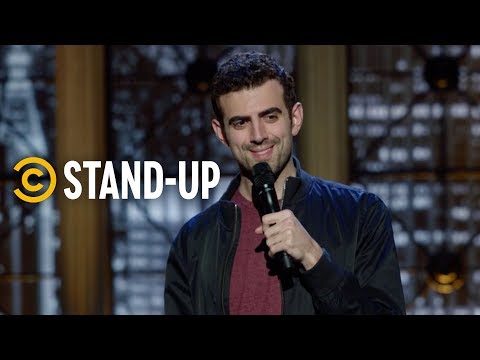
Morril wasn’t gleeful that a child had died, but he used it to explore the boundaries of humor and why we get outraged by select jokes and not others. Plus, black comedy allows us to process grief. It’s called gallows humor.
Dave Chappelle’s latest rant is different. And, sadly, it suggest a cultural rot that cannot be ignored.
The Left, not center-Left souls or classical liberals, crave political violence. Sound hyperbolic? Consider the evidence. There’s too much of it now to ignore.
Chappelle went viral this weekend for a bit at Madison Square Garden. The comedy icon said he’s happy that Charlie Kirk was murdered on Sept. 10, 2025.
DAVE CHAPPELLE: “Ever since that guy Charlie Kirk got murdered, and I shouldn’t say this publicly but…. I feel better.”
Sick. https://t.co/3gp7eE8aS5
— Breaking911 (@Breaking911) November 8, 2026
“I feel f***ed up saying this. It’s scary being a public speaker. Ever since that guy Charlie Kirk got murdered, and I shouldn’t say this publicly but…. I feel better.”
“I know I shouldn’t say it, but it’s just a feeling,” he added. “I just be driving around like, ‘why am I in such a good mood … oh!”
Was there more? Chappelle routinely bans smart phones during his performances, although someone broke the rules to snag this clip.
Others on X suggested people who attended the show confirmed the routine. They didn’t report any comic reflection, regret or even a darkly comic punchline to balance the bit.
We’ll find out more soon. What’s clear out of the gate?
- Chappelle felt comfortable saying it
- The New York crowd responded favorably, without shock
- It wasn’t an isolated incident. Far from it
Days ago, ghoulish podcaster Jennifer Welch and on-air partner Angie Sullivan also brought up Kirk’s murder. Someone commented that they wanted to dig up Kirk’s corpse and kill him all over again.
Their response? Gails of laughter that went on for more than 20 seconds. Watch for yourself.
In all of their hatred and blood thirst, these ghouls seriously consider themselves morally superior to you.
— Riley Gaines (@Riley_Gaines_) November 6, 2026
Conservatives hounded the show’s sponsors in response. Many fled after learning of the segment in question.
Welch and Sullivan posted an apology that doubled as a fundraiser for an anti-gun charity. Will any of the show’s far-Left fans abandon them? How many new sponsors will rush in to fill the advertising gap?
Earlier this year, social media star Druski mocked Kirk’s widow, Erika Kirk, via a viral video. His punishment? He hosted “Saturday Night Live” last night.
These recent incidents are part of a disturbing pattern, one that exposes far-Left performers and, more shockingly, their fans.
The Left love political violence.
EDITOR’S NOTE: Sick of Mainstream Media’s Liberal Bias? I hope you’ll leave a coin (or two) in our TIP JAR.
Earlier this year, “Saturday Night Live’s” Michael Che trotted out an assassination joke targeting President Donald Trump. He noted that the president took in a Broadway play before adding, “What’s the worst that could happen?” alluding to actor John Wilkes Booth killing President Abraham Lincoln at a play.
Sustained laughter and applause ensued. Cheers, too.
This came after a decade of Leftist celebrities wishing death on the president, joking about his death or a combination of the two:
- Charlie Sheen
- Johnny Depp
- Madonna
- Marilyn Manson
- Kathy Griffin
- Pearl Jam
- Snoop Dogg
This, sadly, isn’t new. Trump’s arrival on the political stage brought out the very worst in them.
Now, it’s spreading. Consider these late-night moments.
Far-Left host Jon Stewart was shocked when his “Daily Show” crowd sympathised with Luigi Mangione, accused of killing a healthcare CEO in cold blood. “SNL’s” Colin Jost also appeared stunned when his NBC show’s audience cheered Mangione’s name during a Weekend Update segment.
Need more?
Jimmy Kimmel playfully shared that his show’s female staffers had a crush on the accused killer. More titters from the crowd.
And Bill Burr, a stand-up comic veering hard to the Left of late, has cried “Free Luigi” on more than one occasion, sans irony.
Elon Musk’s arrival in the Trump White House sparked more political violence. Tesla cars were targeted by vandals, while dealerships themselves came under fire.
In Loveland, Colorado, a Tesla dealership was targeted in a series of five attacks with graffiti and Molotov cocktails throughout January, February, and March…On January 20 and February 19, an individual attacked a Tesla dealership in Salem, Oregon, with Molotov cocktails and gunfire. On March 3, seven Tesla charging stations were set on fire at a shopping center outside Boston. On March 6 and 13, a Tesla dealership in Tigard, Oregon, was targeted with gunfire, causing damage to vehicles and the building. On March 7 in North Charleston, South Carolina, a suspect threw Molotov cocktails at a Tesla charging station, accidentally setting himself on fire before being arrested. On March 9, four Cybertrucks were burned in a parking lot in Seattle, Washington. On March 18, two separate incidents occurred. In Las Vegas, a Tesla service center was damaged with gunfire and set ablaze with Molotov cocktails and in Kansas City, Missouri, two Tesla Cybertrucks burned at a Tesla dealership.
Kimmel took that all in and found it hysterical.
“People have been vandalizing Tesla vehicles, new Tesla vehicles. Please, don’t vandalize, don’t ever vandalize Tesla vehicles,” Kimmel said, looking at the camera and pausing to seemingly emphasize his sarcasm.
“The Daily Show’s” Jordan Klepper went even further.
“Yeah! People might get a little upset if you stopped their medical trial halfway through them. Imagine you had to stop getting your malaria medication, or going home with half a butt lift! Imagine it! Imagine it! You’ll never buy pants off the rack again! Or here’s another guess: Maybe people are mad at you because you don’t seem to know what the [bleep] you’re doing!”
When “View” host Sara Haines mentioned the Tesla attacks, her co-host had a cruel reaction. “Awwwww.” Again, the crowd of Leftists ate it up.
And let’s not forget what film won Best Picture earlier this year. The comic thriller “One Battle After Another” glorified anti-government violence targeting agents who enforce immigration laws.

The hate spreads beyond pop culture, of course. It’s why Leftist journalists call riots violence “mostly peaceful.” More recently, NYU professor and podcaster Scott Galloway drew applause for demanding that Musk be put before a firing squad for his allegedly treasonous behavior.
Seeing comedians embrace political violence is something new, sinister and revealing.
These examples work in two terrible ways. They show the moral rot within the artistic community.
The second, more alarming element? They share the Left’s complicity in cheering on violence. If a Kimmel, Che, Klepper or Goldberg met audience blowback for their pro-violence yuks, they’d probably stop.
We’re living in the death of shame, but personalities know enough to protect their livelihoods.
None of this means a Chappelle, Kimmel or Burr should be canceled or have their free speech rights violated. This is a warning, a bright red flag about a culture that shrugs its shoulders as violence escalates.
Those shrugs may soon turn to cheers. Then, pitchforks.
We’ll let a widow have the final word.
To see leftist podcasters, comedians, and commentators laugh about political assassination as though it’s entertainment and the destruction of a human life is a punchline, is beyond disgusting.
My husband, Charlie Kirk, was killed in an act of political violence, something our two children and I will live with every day for the rest of our lives.
A culture that laughs at assassination is one of profound moral decay. It threatens the very foundation of our country and the principles that hold our democracy together.
You do not have to agree with someone’s politics to recognize the value of their life. This should not be so hard.
Political violence must never be something this country tolerates, excuses, or celebrates.
— Erika Kirk (@MrsErikaKirk) November 8, 2026
To see leftist podcasters, comedians, and commentators laugh about political assassination as though it’s entertainment and the destruction of a human life is a punchline, is beyond disgusting.
My husband, Charlie Kirk, was killed in an act of political violence, something our two children and I will live with every day for the rest of our lives.
A culture that laughs at assassination is one of profound moral decay. It threatens the very foundation of our country and the principles that hold our democracy together.
You do not have to agree with someone’s politics to recognize the value of their life. This should not be so hard.
Political violence must never be something this country tolerates, excuses, or celebrates.
The post Pop Culture Proves It: The Left Loves Political Violence appeared first on Hollywood in Toto.


