Log in


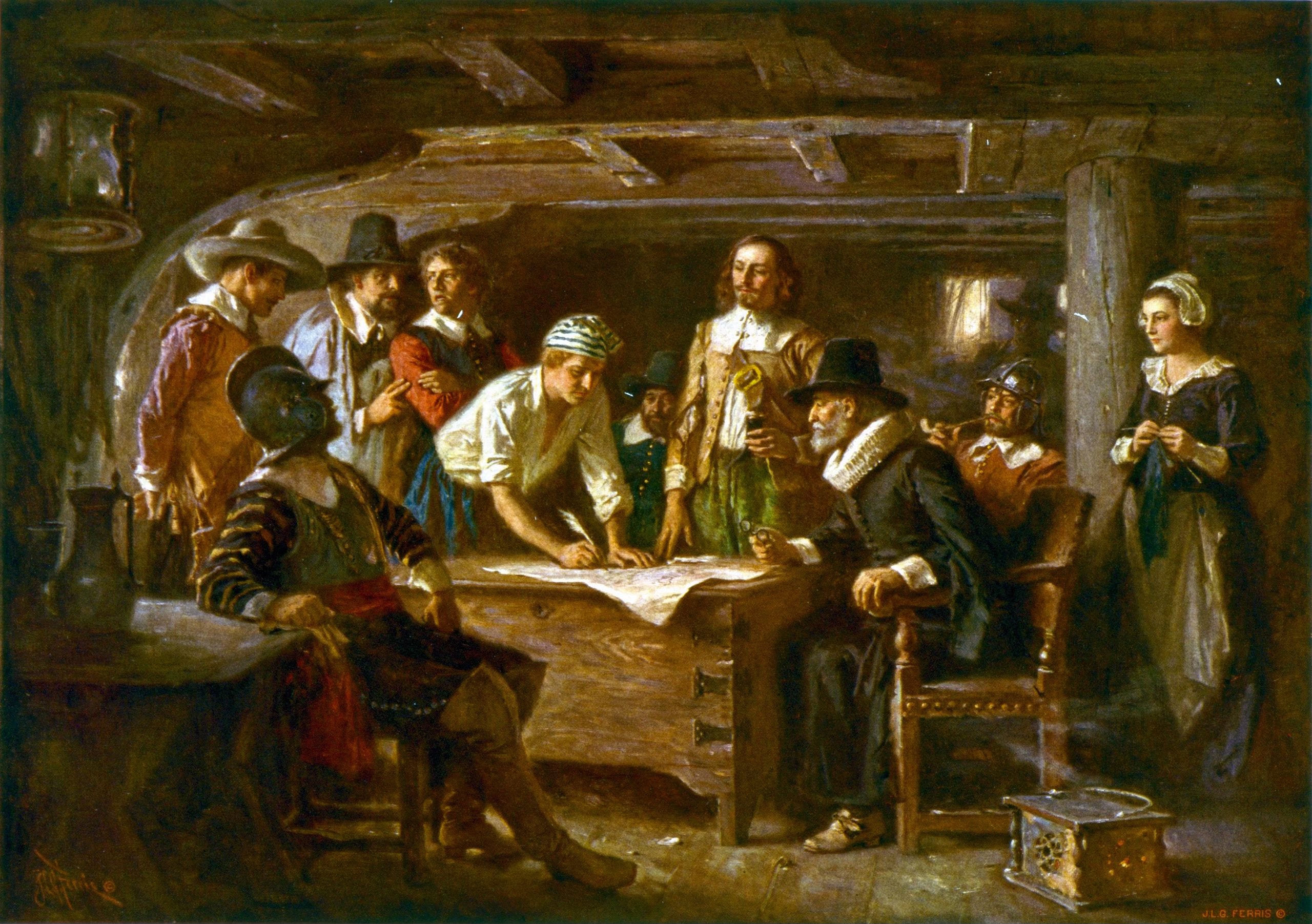
Over the holidays, I’m re-sending a few favorites from The Tracinski Letter over the years—and in this case, also a preview of the future.
One of the things I’m planning to write about in the coming year is more about political philosophy and specifically the philosophical meaning and foundations of liberal democracy. I am specially interested in doing that with the political philosophy of Ayn Rand, which in the 20th Century was classified by most people as “right-wing,” because she was opposed to Soviet communism. Yet she was also, so to speak, a liberal democrat, and that part of her philosophy has rarely been drawn out. The piece below, from March 2020, can be considered a preface to that topic.
Enjoy, and in the meantime, make sure to subscribe or renew for the new year, particularly to lock in your subscription at the current price.
And you can still give a gift subscription to anyone you think would value it.
Ayn Rand’s Answer to the “Social Contract”
I’ve been reading several key books from the newly strident illiberal “nationalist” conservatives, and I’ve noticed that they have mixed feelings about the “social contract.”
Patrick Deneen rejects it because it’s too individualist: it assumes that “the individual ‘creates’ the state,” while he thinks the state creates the individual (by paternalistic molding of our characters, you see). Other nationalists are enamored of the social contract because they think they can use it in an anti-individualist form, as a way of insisting that the “general will” of the nation takes precedence over the freedom of the individual.
In response to this, I’ve been doing a little thinking about this idea of the “social contract,” its philosophical meaning, the scope of its validity, and it’s relationship to the philosophy of Objectivism, mostly to get the issue fully clear in my own mind. A few years ago, I took a step in this direction as part of a more polemical political article, but I wanted to take it farther.
Let’s start with the broadest overview of what “social contract” theory refers to. It has several different variations that start from different philosophical premises and reach different political results. (Curiously, though, all of them were originally presented as theories of monarchical government.) But the common idea is that primitive man originally lived in a “state of nature,” with individuals and families living separately as laws unto themselves, with no government or larger authority to control them. This led to a certain amount of chaos and insecurity, so they banded together and formed a government by common consent, under the implicit terms of a “social contract,” in order to better protect themselves.
The difference in social contract theories has to do with the terms of the contract. In the version associated with Thomas Hobbes, citizens give up some portion of their individual rights in exchange for protection from a monarch. This is a defense of traditional monarchy. In John Locke’s version, individuals give the state the power to protect their rights, but the state is therefore bound to respect those rights. This is the basis for British constitutional monarchy and for American government. In Jean-Jacques Rousseau’s version, individuals submit themselves to the “general will” of a social collective, as expressed through direct democracy or through a single great leader. This was the source of a whole lot of trouble, from the French Revolution to 20th Century totalitarianism.
Noticing this variety in premises and conclusions, we are entitled to suspect that the social contract is not a source of political ideas but a vehicle for them. In my previous article on this, I described the social contract as a “mental construct” or “thought experiment,” and it is in the nature of such hypotheticals to be filled with whatever pre-existing assumptions and ideological loyalties the theorist brings with him.
Let’s expand a bit on why the social contract should be regarded as a mental construct rather than a literal description of reality. When the idea originated, it was a speculation about the origin of government, rather than any kind of literal historical description of the foundation of a particular state. Since then, historians, archaeologists, and ethnographers have attempted to figure out how most governments have actually originated, and the results are a good deal less reassuring: they often originate in violence, conflict, and conquest, or they emerge out of tribal loyalties.
This is where the nationalist critics of the social contract have a point. Social contract theorists tend to posit a man in the state of nature who is rational, enlightened, and independent. Historically, governments usually originated among people who were primitive, superstitious, and tribalistic.
To be sure, there are a few historical or legendary descriptions of the kind of spontaneous agreement described by the social contract. In the Bible, for example, after the Hebrews conquer the land of Canaan, they go through a period in which they have no overarching government, and “every man did that which was right in his own eyes.” (That’s the last line of Judges.) Then in response to threats from surrounding tribes, they ask for a king to rule over them. It’s not exactly the best form of social contract, because the prophet Samuel warns them the king will be cruel and exploitative, and much of the Old Testament that follows is a history of the foolishness and wickedness of their kings. It’s the Hobbesian social contract.
That leads us to the other problem with the “social contract.” What about people whose governments were first established by conquest and enslavement? Since the government of Russia dates back to the patrimonial absolutism of the Mongols, does that mean Russians can never expect to be free? If so, I will transmit that to Vladimir. He will be very glad to hear it.
Taken as a descriptive standard, the social contract would be the ultimate in conservatism: an endorsement of whatever social arrangement happens to exist in a society, on the grounds that this is the system everyone has always accepted.
Clearly, though, its use is intended to be normative. It is intended to promote a certain kind of social contract. This is certainly required for its use in a British and American context. The foundation of British government was the Norman Conquest, which imposed a feudal government on top of older Saxon and Viking customs. Those legacies were then reconciled in the Magna Carta, which was just the beginning of a long series of changes and adjustments to the English constitution. There was no one social contract to which later generations were bound.
In the settlement of America, we would find the closest thing to Locke’s idea of men in the state of nature forming a social contract. These were educated, enlightened men marching into a wilderness beyond the reach of any government and making agreements with one another for their mutual protection. But those contracts, too, did not remain stable. The Mayflower Compact was superseded in 1691, when the Plymouth Colony was absorbed into the Massachusetts Bay Colony. Other such agreements were royal charters, spelling out the rights of colonists in their relationship with the English monarch. But when the colonists decided that the crown had voided those charters, the first thing they did after declaring independence was to write their own constitutions. These were based partly on the customs and institutions that had come before but often introduced dramatic changes.
We can understand why they made those changes. The whole promise of a social contract, the whole point of calling it a “contract,” is to be able to claim the legitimacy that stems from the supposedly free choices of the citizenry—the “consent of the governed,” in Locke’s phrase. But to bind current generations unalterably to an arrangement made by their predecessors is the opposite of consent. (The US Constitution answered this problem by creating a process for its amendment, one difficult enough to keep our supreme law stable but not so difficult as to make it unalterable.) You can see, though, the appeal of that form of the social contract to the nationalist conservatives. The central idea of their philosophy is to inculcate submission to traditional authority, so their version of the social contract is a vehicle for demanding this submission.
The left’s version of the social contract is similar but merely attempts to freeze a different set of traditions in amber. You have undoubtedly heard, for example, that the welfare state is necessary because it is “part of our social contract.” This boils down to: “Because Franklin Roosevelt pushed this through in 1935, you have to accept it as the way things are until the end of time.”
This highly selective invocation of the social contract brings us back to the point where we started: The idea of a social contract is not a source of political ideas but a vehicle for them. It is not a description of an actual arrangement but a thought experiment that allows us to work out the implications of more basic ideas about the nature of man, the proper goals of human life, and the nature of the state.
Here is how I put it in my previous examination.
The point is not whether there ever really were the kind of rational and industrious men that Locke conceives as living in an untamed wilderness with no pre-existing civil society. (The closest real-life example would be the settlement of America, which is why Locke’s ideas had such resonance here.) The point is to pose a thought experiment where you are asked what you would do if you found yourself in such a condition, and thereby shed light on what the proper purpose of government should be. There’s also another purpose to the thought experiment. By conceiving of a state in which individuals existed prior to government, Locke is trying to get the reader to consider the idea that individuals have priority over government, that they come first and government comes second, and therefore that government ought to answer to them.
If that’s the role of the social contract, is such a thought experiment necessary at all? Is there a way to accomplish the same thing without the same problems? Here is how you might do it.
Since man’s mind is his basic tool of survival, his means of gaining knowledge to guide his actions—the basic condition he requires is the freedom to think and to act according to his rational judgment. This does not mean that a man must live alone and that a desert island is the environment best suited to his needs. Men can derive enormous benefits from dealing with one another. A social environment is most conducive to their successful survival—but only on certain conditions....
A society that robs an individual of the product of his effort, or enslaves him, or attempts to limit the freedom of his mind, or compels him to act against his own rational judgment—a society that sets up a conflict between its edicts and the requirements of man’s nature is not, strictly speaking, a society, but a mob held together by institutionalized gang-rule. Such a society destroys all the values of human coexistence, has no possible justification and represents, not a source of benefits, but the deadliest threat to man’s survival. Life on a desert island is safer than and incomparably preferable to existence in Soviet Russia or Nazi Germany.
This is, of course, from “The Nature of Government,” the main essay in which Ayn Rand spells out her political philosophy. She takes the basic question behind the social contract—under which conditions would you benefit from being part of an organized society with a government?—and makes it a question asked in the present in the context of real alternatives. The unlivability of life under Soviet tyranny was something she had directly observed (and made into the theme of her first novel). As an immigrant, she had made the choice to leave that society for a free one. As for choosing to flee to a deserted island to escape dictatorship—or perhaps to a hidden valley in the mountains—she had made that the premise of her final novel.
Locke’s rational, independent man in the state of nature in Ayn Rand’s version becomes the immigrant or dissident voting with his feet.
This scenario serves the same purpose as the social contract thought experiment, prompting her to answer the question by referring to more fundamental premises about the nature of man and the requirements of human life. While Locke held that God gave the earth to the “rational and industrious,” Ayn Rand refers to an ideal of “rational, productive, independent men in a rational, productive, free society,” and argues that, “To recognize individual rights means to recognize and accept the conditions required by man’s nature for his proper survival.”
Having recast the issue in her own terms, she brings back traditional elements of the social contract theory, such as this one:
If a society provided no organized protection against force, it would compel every citizen to go about armed, to turn his home into a fortress, to shoot any strangers approaching his door—or to join a protective gang of citizens who would fight other gangs, formed for the same purpose, and thus bring about the degeneration of that society into the chaos of gang-rule, i.e., rule by brute force, into the perpetual tribal warfare of prehistorical savages.
This is not so different from Hobbes, and it is followed by a section which talks about the delegation of the right to self-defense and the need for the “consent of the governed” in terms very directly inspired by John Locke.
Unlike these social contract theorists, though, she does not attempt to project these issues back into a speculative past. In fact, in her reference to the Nazis and the Soviets, she was bringing it into the present of the 20th Century. This allows her to take a more skeptical view of the history and origins of government, presenting a free society not as a return to a legendary golden age but as a comparatively recent achievement.
The evolution of the concept of “government” has had a long, tortuous history. Some glimmer of the government’s proper function seems to have existed in every organized society, manifesting itself in such phenomena as the recognition of some implicit (if often non-existent) difference between a government and a robber-gang—the aura of respect and of moral authority granted to the government as the guardian of “law and order”—the fact that even the most evil types of government found it necessary to maintain some semblance of order and some pretense at justice, if only by routine and tradition...
In mankind’s history, the understanding of the government’s proper function is a very recent achievement: it is only two hundred years old and it dates from the Founding Fathers of the American Revolution.
As for her “rational, productive, independent men in a rational, productive, free society,” this is not a projection of an idealized future but a description of a reality of the recent past and the present—of America in the 19th Century (at least, in the North) and still, to a large extent, today.
That she could do so is due in large part to the accomplishments of the Lockean social contract theory. Locke had some partial examples to draw from, but he could not point to an example of a fully free society in practice. Ayn Rand could draw from the history of America and from its contrast to the Soviet Union, allowing her to place our choice of social systems fully in the present day.
The only remarkable thing about this is that nobody else chose to do so.
In this respect, today’s nationalist conservatives are merely a symptom of an underlying failure. Too much of the defense of liberty has been left to rely on ideas and argument that, like Locke’s or those of the Founding Fathers, are centuries old and have not been sufficiently strengthened or elaborated on with the benefit of all our extraordinary experience since the American Revolution.
As someone always looking for the opportunity in danger, I see the rise of the illiberal nationalists as the stimulus we need to look to the intellectual foundations of liberty and do the work, not merely to restore them, but to build them more solidly and with more modern materials.
It’s an opportunity to renew the philosophical case for liberty in the modern era.