69882 stories
·
2 followers

What If Robots Take All the Jobs?

HBL
1 Share

Hint: They can’t

People have it all wrong. And it’s not the first time.

Robots are going to take your job? No doubt. But your next job will pay so much more that you may decide to cut your work hours. How does 20 hours a week sound?

We’re all going to get richer. The more that AI and robots can do for us, the richer we will get.

Wealth is goods produced. AI and robots will make everyone’s labor far more productive. More wealth in the whole economy will be the result.

If robots make it much easier to do things, then a lot of factors of production will be freed up. If a robot-run factory cuts costs in half, then the saved half is available to fund more production, either of the same product or other products across the economy.

For as long as we have records, cost-savings have been reinvested, except for a tiny percentage going to the owners’ personal consumption.

More investment means more goods produced, which means a drop in the cost of living, which means a rise in the standard of living.

But will you be able to participate in it? If your job is replaced by AI or a robot, will you be able to find a new job? Will you be able to earn some money and thus be able to take part in this bonanza?

Yes.

How do I know that? How do I know that the robots won’t be doing everything, leaving nothing for human beings to earn money doing?

The temptation is to answer by finding things robots won’t ever be able to do. “Robots will never be great chefs.” “Robots will never be venture capitalists.” “Robots will never write a first-rate symphony.”

That’s irrelevant. The point is that even if AI and robots could do everything better than any human being, that would enhance, not undermine, the value of human labor.

Why? The explanation comes from applying here an important truth discovered two centuries ago. In 1817, the great English economist David Ricardo identified “The Law of Comparative Advantage.”

Ricardo was concerned with trade between nations. His Law shows that even if a given country produces everything more efficiently than another country does, it pays both countries to specialize in what they do best and trade with each other..

The Law of Comparative Advantage applies much more widely than to international trade. It used to be illustrated by considering a CEO and his typist—back when there were typewriters and typists. Even if the CEO can type faster than a given typist, it pays him to hire that typist because off-loading the typing work saves him time. He can then use that saved time in the area of his comparative advantage: running the company.

Likewise, even if there comes a time when the robots can do everything better and faster than human beings, more wealth will be produced if robots and humans each specialize in what they do best.

Super-robots would produce more for us if we save them from having to do things that are less productive.

(Of course we won’t be trading with robots: robots own nothing. Robots are owned by people, and those people will be paid for selling robots or for renting them out, just as you can rent power tools from Home Depot today.)

The Law of Comparative Advantage means humans will never run out of productive work to do. There will always be tasks that you don’t want to waste your rented or owned robots’ time in doing.

If you’ve got a robot building you a swimming pool, you don’t want him to stop to cook you dinner.

A chainsaw is a lot more efficient than a knife at cutting. But you don’t use a chainsaw to slice a loaf of bread. Particularly not if that chainsaw is being used by a robot to clear a place for a tennis court in your backyard.

So, rather than panic over “the rise of the machines,” let’s bear in mind the Law of Comparative Advantage and a couple of simple facts.

The need to economize.

No matter how fantastic the robots’ abilities become, the robots will never be able to do everything at once. Will you set them to building you a bigger house? Or designing and constructing a rocket ship to take you to Mars and back? They can’t do both at the same time.

Plus, creating the rocket ship will take staggeringly more resources and robot-hours than building the house. You’ll have to obtain materials for either project. How will you to that? By paying with money. Can you pay with robot-hours? . You have to buy or rent the robots. Money is not going away.

Suppose you, poor soul, own only two robots. Just building a new house for you will take them 6 months. Maybe you should rent a few more robots to speed the project along. Or is that a waste of robot time?

If you own robots outright, you can have them make additional robots. But that takes time. And it takes raw materials that you have to purchase. Can you afford to make or rent more robots and more materials?

And you naturally want more land for your new house. Land is in limited supply. It has to be paid for. What would you have to give up to get more land? Is it worth it?

These are economic issues. They require comparing values, making trade-offs, figuring “opportunity costs”—the factors that give rise to markets and prices.

Even with science-fictional super-robots, there will still be money changing hands and a price-system, just as now. You will still be paid for working—in the field of your comparative advantage.

New kinds of jobs will appear, as they always have when technology advances. Ironically, most of the jobs people are afraid of losing—such as programming jobs or truck-driving jobs—were themselves created by technological advances. There used to be an American saying: “Adapt or die.” Having the same kind of job as your father and grandfather did is not the American dream.

What new types of job will be created? I can no more project that than a man in 1956 could have projected that today there would be jobs in something called “social media”; or that money can be made by driving for Uber and by renting out living space through AirBnB.

The robots will make work much easier, more interesting, and much better paid.

Prepare to be enriched.

Published Mar 09, 2026 on Substack

Read the whole story
gangsterofboats
2 hours ago
reply
Share this story
Delete

Why Is Israel Blamed for the Iran War?

1 Share
Why Is Israel Blamed for the Iran War?

The post Why Is Israel Blamed for the Iran War? appeared first on New Ideal - Reason | Individualism | Capitalism.


Download video: https://www.youtube.com/embed/mU5EJxVtork


Download audio: https://media.blubrry.com/new_ideal_ari/content.blubrry.com/new_ideal_ari/Why_Is_Israel_Blamed_for_Iran_War.mp3
Read the whole story
gangsterofboats
2 hours ago
reply
Share this story
Delete

How the BBC came to be

1 Share

[AIUI etc, etc.]

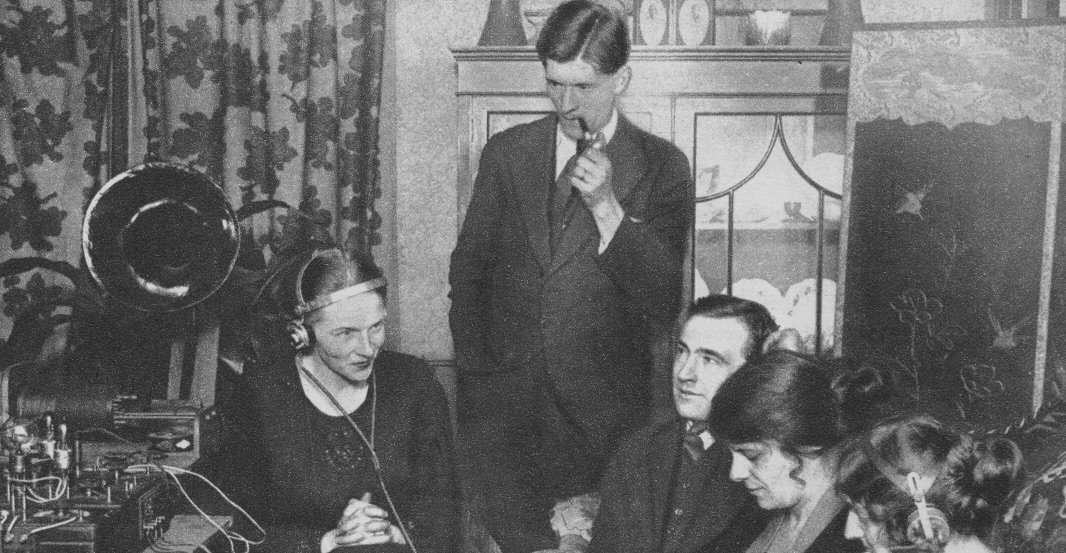
In the beginning there were wireless sets. But the government worried that these could be used by spies for a foreign power. So it demanded that wireless owners took out licences. The licences were free the government just wanted to know who had a wireless. Just in case.

Then someone came up with the idea of broadcasting. Music, lectures, news, that sort of thing. The government came up with a scheme. They would charge a fee for the licence. It would also demand that wireless manufacturers make a contribution. To sugar the pill it would make it illegal to sell a wireless set that wasn’t made by a member of the British Broadcasting Company.

The minister responsible for this? One Neville Chamberlain.

And so in late 1922 the BBC, in the shape of such regional broadcasters as 2LO, came into being. And it was very popular – save for the fact that building one’s own set was illegal. But the arrangement had an expiry date. And a committee was set up to decide what to do next.

A hundred years ago it reported and as you can probably guess, the manufacturers were ditched with the recommendation that a public body to be known as the British Broadcasting Commission be put in its place financed entirely through the licence fee.

Why? I seem to remember being told that the Company was in dire financial straits. But there’s not a hint of it in the report as published in The Times. Actually, there is very little justification at all. Although they do say this:

Notwithstanding the progress which we readily acknowledge, and to the credit of which the company is largely entitled, we are impelled to the conclusion that no company or body constituted on trade lines for the profit, direct or indirect, of those composing it can be regarded as adequate in view of the broader considerations now beginning to emerge. 

So you are getting rid of something you “readily acknowledge” is a success for something that might work?

We do not recommend a prolongation of the licence of the British Broadcasting Company or the establishment of any similar body composed of persons who represent particular interests. 

I’ve got some bad news about how that’s going to work out.

We think a public corporation the most appropriate organization. Such an authority would enjoy a freedom and flexibility which a Minister of State himself could scarcely exercise in arranging for performers and programmes, and in studying the variable demands of public taste and necessity. 

The Times’s own report of the report has this to say:

The British Broadcasting Commission will be appointed by the Crown, and the Committee feel that the proposal is an interesting development in the application of the principle of public ownership.

So, the whole thing was a communist experiment. Great. And then there was this doozy:

It is felt that that principle can be easily applied in this instance, because broadcasting must of its very nature be a monopoly.

Clearly that argument falls because it is not true that broadcasting is a monopoly. But even if it were, as a libertarian, in principle I would prefer such things to exist in an unfettered free market.

Before it became Lenin in the lounge

Update 10/4/26. Incredulity has been expressed over the idea that d-i-y wireless sets were illegal. They were but only for about a year or so. And I don’t think there were any prosecutions. Oddly enough, when “interim” licences were first issued – for just such sets – the number of licences doubled more or less overnight.

Read the whole story
gangsterofboats
2 hours ago
reply
Share this story
Delete

Bypassing the Straits of Hormuz

1 Share

It seems to me that for Iran to use the Straits to squeeze the rest of the world into acquiescing into its brutality is a ploy that brings diminishing returns. Given that oil can be piped as well as shipped via a tanker, construction of more pipelines to take the stuff – and gas – over land rather than via sea seems screamingly obvious. Sure, pipelines can be attacked and that creates issues around security. Even so, the key is to have options. I have heard it said that one reason behind the Hamas Oct 7 attacks was that Iran wanted to stymie a pact between Israel and Saudi Arabia that would, as part of it, include a cross-region pipeline or set of pipelines (maybe with the oil reaching the Mediterranean coast in Israel).

As conflict between U.S.-Israeli forces and Iran effectively shutters the Strait of Hormuz, Saudi Arabia has activated a 45-year-old contingency plan to bypass the blockaded waterway and keep global crude markets afloat. The centerpiece of this strategy is the East-West pipeline, a 1,200-kilometer artery that transports crude from the kingdom’s eastern fields to the Red Sea port of Yanbu. Long considered a redundant relic of the 1980s Iran-Iraq War, the line is now the primary exit point for Saudi exports.

State-owned oil giant Saudi Aramco has rapidly reoriented its logistical center of gravity toward the west due to the lingering threat of Iran closing the Strait of Hormuz. 

Even if the Straits retain some value, that is going to erode and fast in the next few years, is my guess.

And this whole saga also highlights the truth of a quote attributed to an American fracker business executive, who is supposed to have said that these folk are not just extracting more oil and gas, but are helping to save Western civilisation. Whoever that was, he or she wasn’t exaggerating.

As of the time of going to press, President Trump has announced a two-week ceasefire. I worry that this gives Iran breathing space – I don’t think the region will be sorted out until or unless the regime in Tehran is overthrown, although this needs, ultimately, to come from Iranians themselves.

That said, it is worth taking stock of what has happened in terms of the loss of military power in Iran, including its ability to make nukes. That’s not a trivial achievement. And the world – including China – has had a good look at the impressiveness of the US and Israeli air forces and special forces. It has, to be fair, also had a good look at the parlous state of the UK’s military, particularly its pitiful navy. 

Read the whole story
gangsterofboats
2 hours ago
reply
Share this story
Delete

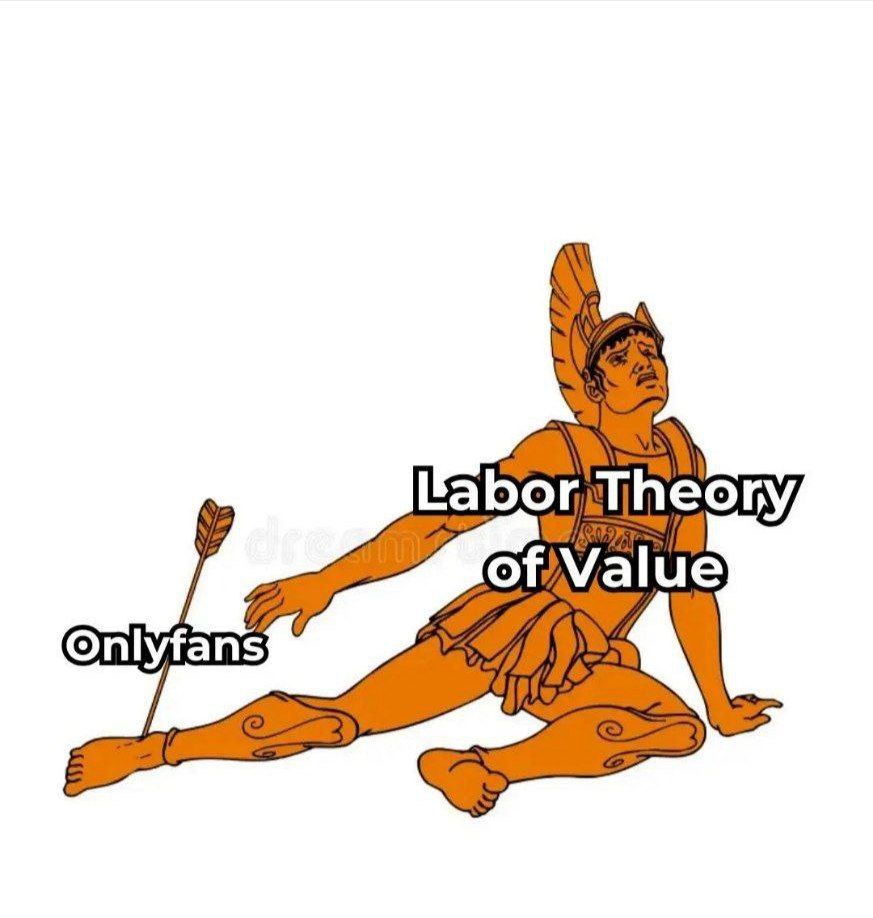
Labour theory of value…

1 Share

via. I,Hypocrite… suitable commentary from Café Viennois

Read the whole story
gangsterofboats
2 hours ago
reply
Share this story
Delete

It is sometimes said Americans do not ‘get’ irony

1 Share

J.D. Vance, who is the Vice President of the USA, goes to Hungary, an EU member state, and delivers a campaign speech for Victor Orban, the president of Hungary, in which Vance accuses the EU of… interference in Hungary’s elections.

Am I the only one who finds that absolutely hilarious?

Read the whole story
gangsterofboats
2 hours ago
reply
Share this story
Delete
Next Page of Stories