72181 stories
·
2 followers

Man of the People

1 Share
Man of the People

A review of Frank Capra: A Life by Sam Wasson; 736 pages; HarperCollins, New York (October 2026)

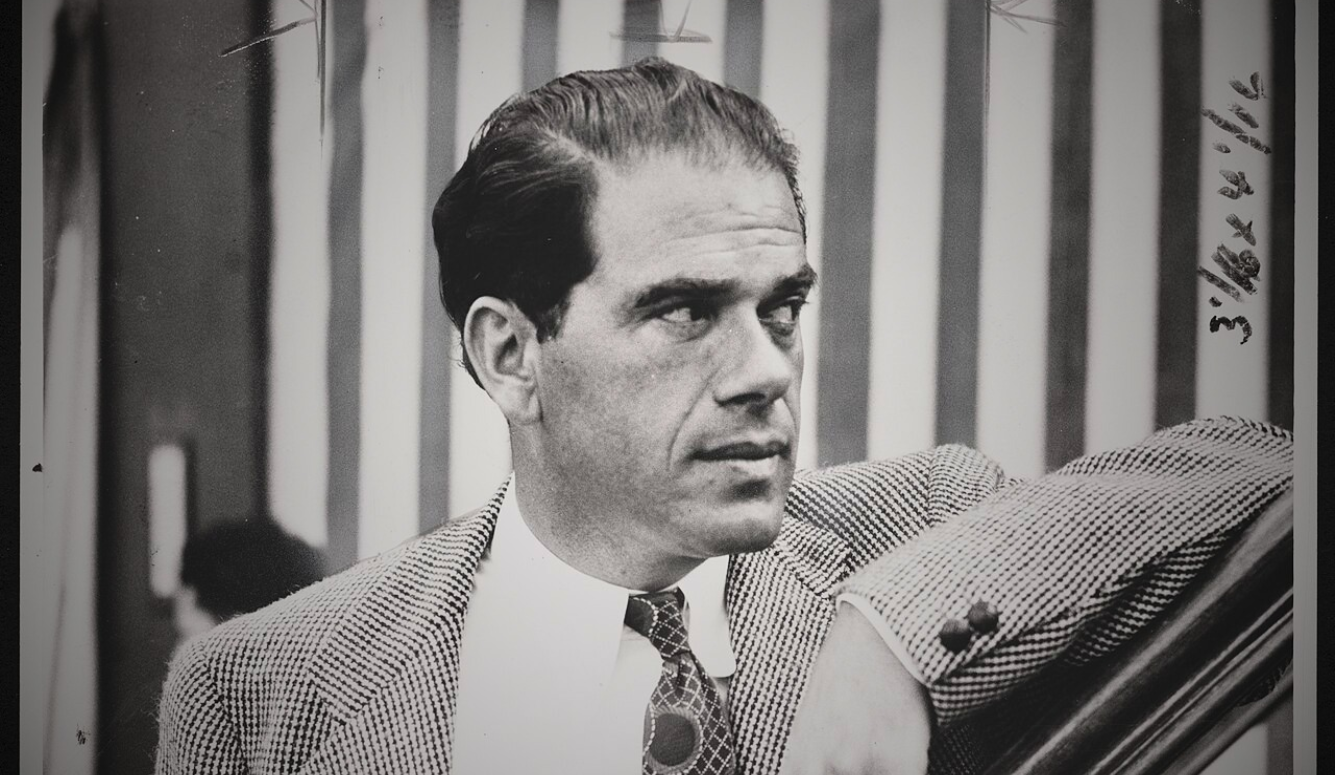
Near the start of his massive new biography of Frank Capra, film historian Sam Wasson describes his subject as “the greatest American director who ever lived.” In the FDR era, that would have been an uncontroversial opinion. Between 1935 and 1939, Capra received the Oscar for Best Director three times. He was on the cover of Time magazine. He was the president of both the Screen Directors Guild and the Academy of Motion Picture Arts and Sciences. “Capra,” the novelist (and Spectator film critic) Graham Greene wrote in 1936, “has what Lubitsch, the witty playboy, has not: a sense of responsibility, and what Clair, whimsical, poetic, a little precious and à la mode, has not, a kinship with his audience, a sense of common life, a morality: he has what even Chaplin has not, complete mastery of his medium.”

Capra’s career foundered in the Fifties, but he was held in high regard for the rest of his life, collecting awards, continuing to play an important role in guild politics, and sitting for countless interviews. Then, in 1992, a year after Capra’s death, Joseph McBride published his long-awaited, meticulously researched biography of the director, Frank Capra: The Catastrophe of Success, and readers recoiled. McBride revealed that Capra was not a sweet everyman like the heroes of his films but an absolute bastard—a liar, a credit-thief, an antisemite, a political reactionary who kept a portrait of Mussolini on his bedroom wall, and “a gut-punching little man.” McBride acknowledged that Capra had made some excellent films, but he pointed out that much of what we call Capra-esque was, in fact, the invention of screenwriter Robert Riskin:

What Capra called his “formula” did not emerge until he began working with Riskin material in the early 1930s. His career before that point was scattershot and uncertain, that of a director in search of something to say. But once the formula had been established, Capra was content to repeat it, with minor embellishments, for the rest of his career, eventually to diminishing effect. ... Without Riskin, the formula became a straitjacket for Capra, one in which he struggled uncomfortably for years but could never manage to escape.

Though Wasson never says so explicitly, it’s clear that his biography of Capra is meant to correct the record. “By his own example, Capra led,” Wasson writes. “Working late into the night, he was the filmmaker his colleagues wanted to be, the winning embodiment of industry, kindness, patience, integrity, and—when he was called upon to exceed his managerial duties—talent.” That’s laying it on a bit thick, I think. Still, Capra could use a boost because he was, in his prime, an incredibly gifted filmmaker, directing some of the most luminous films to come out of Hollywood during the Great Depression, including Lady for a Day (1933), It Happened One Night (1934), and Mr. Smith Goes to Washington (1939).

Read the whole story
gangsterofboats
5 minutes ago
reply
Share this story
Delete

Did Fossil Fuels Halt the Next Ice Age?

1 Share
Did Fossil Fuels Halt the Next Ice Age?

Human activities that impact the Earth are often portrayed in a bad light. But a new study in Science gives us reason to be grateful for our newfound powers. Humanity seems to have interrupted the beginnings of the next glaciation—commonly known as an ice age. We have long suspected our activities might postpone the return of continent-sized ice sheets. The extraordinary suggestion now is that the process had already started, and that we stopped it.

Researchers examined the Barnes Ice Cap—the last surviving remnant of the enormous Laurentide Ice Sheet—on Baffin Island, high in the Canadian Arctic, and found that it began expanding again roughly 2,000 years ago. They interpret that renewed growth as the first stage of the next glaciation. Around 1960, however, human-caused atmospheric warming seems to have reversed the trend, and the ice began retreating. In their reading, humanity interrupted the next glaciation in its infancy.

Did Fossil Fuels Halt the Next Ice Age?
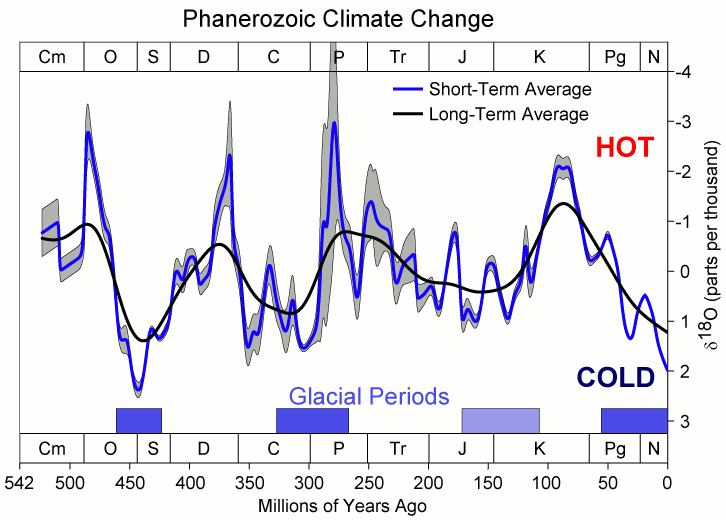
Earth’s climate over the past 500 million years, with glacial periods marked by the blue bars. The most recent, at far right, is the ice age we are still living in. Wikimedia

We sometimes hear talk to the effect that the natural world was perfect until humanity started interfering with it, and that we are better off ourselves the less we interfere. But the record of the advance and retreat of the ice makes that an impossible position to defend. Technically, we still live within an ice age that has been going on for millions of years, because an ice age is simply any period when there are persistent ice sheets at or near the poles; in colloquial usage, “ice age” just means another cold glacial period. During an ice age, the climate alternates between long glaciations where the ice advances and shorter interglacials where it retreats. Agriculture, cities and eventually the modern world developed during the Holocene, the current relatively warm interglacial that began around 11,700 years ago. We should work to make it last as long as we possibly can.

During the last glaciation, the Laurentide stretched across the North American continent and well south into the United States, and in places was over three kilometres thick. At the last glacial maximum, roughly 20,000 years ago, global temperatures were about 6 degrees Celsius cooler than today. So much water was locked up on land that sea levels were more than 120 metres lower. Coastlines were displaced, northern landscapes transformed, and enormous areas that now support farms, forests and cities were buried under sheets of ice. Land just beyond the ice would not have been especially pleasant either, as great ice sheets generate their own weather. Cold, dense air drains down their slopes via gravity, producing katabatic winds that spill onto the surrounding country. Although the threat is not imminent, a return to such conditions would eventually be devastating for human settlements and agriculture. Canada would be frozen off the map, as would much of the northern United States and significant parts of Europe.

Read the whole story
gangsterofboats
7 minutes ago
reply
Share this story
Delete

AI Company Employees Should Unionize

1 Share

I.

Should safety-conscious employees at AI companies quit in protest, or stay and fight? The latest argument didn’t resolve the dispute, but it did get me in contact with organizers working on both sides.

Those planning to stay and fight are increasingly interested in labor organization. This doesn’t need to mean literal government-recognized Labor Unions. An existing group, Coalition Of Concerned AI Staff, is already helping support interested employees and investigating other models to do more. But it might involve using laws, rights, and tactics associated with the National Labor Relations Act and the labor movement.

You may remember stories of bitter unionization battles at places like Starbucks, but AI workers can probably route around that. The toughest labor disputes happen in fields where the employer could easily fire all the organized workers and replace them from a bottomless pool of faceless scabs: although this is illegal, everyone needs to be maximally lawyered-up to prevent it. But there are so few skilled AI researchers that these laws are hardly necessary; if a dozen top AI researchers threaten to walk, it doesn’t matter whether Section P Sub-Section Q forces the AI company to negotiate - the AI company will want to negotiate. This cuts through the red tape that intimidates workers in less blessed fields1; AI researchers could likely get away with only the package of rights provided by informal “concerted activity”, defined as two or more workers doing anything vaguely labor-activism-shaped. Just put up a sign somewhere saying “OpenAI Safety Union” and get at least two employees to stand behind it, and it counts.

(even the word “union” is unnecessary; if employees felt like it was too adversarial, they could call it “OpenAI Research Council” or something)

Once an organization existed, the law would ban the company from firing people simply for being part of it, or talking to other members, or planning demands or actions together. It also couldn’t fire workers for striking over workplace conditions2.

Does the “workplace conditions” requirement rule out most forms of safety activism? Not necessarily: many safety issues double as workplace issues, including whistleblower protections, auditing requirements, and safety team staffing. Most of all, fears of recursive self-improvement are naturally workplace-related: whatever else RSI does to the world, it will also automate AI researcher positions. This would be a popular starting issue that might attract even non-alignment-pilled colleagues.

But even if some safety issue has no workplace relevance at all, employees can still strike over it; they only lose their protection against being fired. And good AI researchers are worth tens of millions of dollars each and nearly irreplaceable, so AI companies are already averse to firing dozens of them at once. And any attempt to fire striking AI researchers would likely make national news and be a PR disaster. So the legal protection against being fired isn’t doing most of the work anyway, and AI employee organizations could strike over issues without direct workplace relevance if they wanted3.

What if employees think their company already does a good job prioritizing safety? Then they should organize in order to give their already-virtuous company more options. Negotiations between unions get less antitrust scrutiny than negotiations between companies, so workers can forge deals to slow research or prioritize safety even when executives’ hands are tied.

For example, suppose that OpenAI leadership orders its researchers to switch to a less-monitorable looped transformer design. A safety-conscious employee union might ask further questions, or mutually refuse to pursue this. If Sam Altman said that they had to build a looped transformer, or else Anthropic would build it first and beat them, the organizers could call up their friends at the Anthropic Employee Union and ask whether they would go on strike if Anthropic built a looped transformer. If the Anthropic Employee Union said yes, then the two unions could present a united front, and their companies wouldn’t have to worry about the other company racing ahead.45

Although on its own this has limited value - Meta or DeepSeek could still build the looped transformer - these union deals could also provide a standard that the industry could rally around, or a clear starting point for government intervention. In an extreme case, two unions could negotiate the beginnings of a pause deal, force it on their parent companies, and the government could take note and make it part of a future international deal.

What else could unions or union-like organizations work toward?

  • Upholding normal protections around discipline and firing. In October, OpenAI fired three safety researchers after accusing them of leaking information on the company’s experiments with potentially-dangerous looped transformers; these accusations now seem to be false, with the most likely scenario being that OpenAI was angry about the leak and fired some people in the vicinity of the problem to make a point. If OpenAI employees had a union, the company might have to be more careful about firing employees under false pretenses.

  • Holding companies to the commitments they made during September’s excitement around Pacing The Frontier, for example, demanding that they hire independent evaluators with employee-level access by such-and-such a time.

  • Demanding transparency, eg about compute allocation as described here, or about the information necessary to measure the speed of recursive self-improvement.

  • Acting as an independent voice holding companies to their commitments. This is another one that works even if (especially if?) employees already trust their company leadership. Currently, companies struggle to make credible promises because there’s nobody inside who can enforce them. A union that threatened to investigate or raise a fuss if a promise were broken could help executives be taken seriously.

If you’re interested, contact the people taking point on this, who I can vouch for as smart and trustworthy, at AIemployeeorganizing@gmail.com

II.

For people taking the other route - whistleblowing or quitting - my contacts recommend talking to Psst, a nonprofit that provides legal advice for concerned tech workers.

Whistleblowing is a fraught process. Your company has more experience catching and neutralizing whistleblowers than you have being one, and if you’re working on your own, then you will probably fail to cover your tracks (did you know companies look to see how many times different employees checked leaked documents, on the grounds that someone who’s agonizing about whether to whistleblow about them probably reads them more often than most?) Another classic mistake is to complain about something internally, then whistleblow after your complaints are not taken seriously; it’s not hard for companies to connect the dots and realize that the complainer and the whistleblower are probably the same person. Psst has more experience with this than you or your company, and can walk you through the process.

Even if you’re thinking of quitting, Psst may be able to help. You may have more options than you thought, like threatening to quit unless you get the thing you want. And if you do decide to quit, you may want to do it in the most effective way possible - make a splash on your way out, like Jacob Coxon did. This requires some basic media literacy, and Psst will connect you with the people who can give it to you.

Contact Psst by messaging @PsstLegal.01 on Signal on a personal device without any employer spyware. The person on the other end will be a lawyer, and your conversation with them will be confidential.

Whatever AI employees do, they should do it soon. RSI could start making them obsolete as soon as next year, so they may never have this amount of leverage again.

1

To become an official majority union, a union must win the support of a majority of workers in a secret ballot. This gives them a few extra rights like forcing companies to bargain with them (the companies don’t have to agree to any bargain, but can get in trouble for bargaining in bad faith if they’re pointlessly recalcitrant), but also restricts the union’s ability to legally advocate for non-workplace-related causes. A union can also get some of these rights by having an employer voluntarily recognize them. We don’t expect that AI company unions will go down either of these paths.

2

Companies do have the option of replacing striking workers during a strike, then firing them after the strike because their jobs are already filled. But frontier AI researchers are hard to replace en masse, so they may not need to worry about this.

3

If AI destroyed the world, wouldn’t that negatively impact working conditions at AI companies? Legal theory only considers a generally destructive event detrimental to working conditions if it would damage the conditions more than it damaged everything else, so this argument probably wouldn’t hold.

4

This particular example may straddle the border of legality; the situation might change depending on how much it seemed like a nod-and-wink deal between Sam and Dario, and whether it was a purely political demand (as in this case) vs. had a plausible connection to working conditions. I would still be excited about borderline-legal examples, because court cases might last longer than my timeline to AGI anyway, the publicity would be pure positive, and any sanctions if it turned out illegal would likely be weak.

5

Legally recognized unions get more antitrust exemptions and bargaining rights, and potentially could bring both Anthropic and OpenAI to the table and hammer something out, but they are under closer scrutiny to ensure that they focus on workplace conditions rather than issues of general interest.


Read the whole story
gangsterofboats
8 minutes ago
reply
Share this story
Delete

Cambridge’s Investigation of Jason Arday’s Death Won’t Ask a Central Question

1 Share
Treating the tragic affair as a psychotherapeutic problem, the university apparently will not consider whether Arday should have been appointed in the first place.

Read the whole story
gangsterofboats
2 hours ago
reply
Share this story
Delete

Lao Gu: Why You Should Never Introduce an Inheritance Tax

1 Share

An Austrian-school writer in China, Lao Gu, “Never Introduce an Inheritance Tax,” Ludwig von Mises Substack (Nov. 13, 2026), on why an inheritance tax is never just a tax on the rich: it raises almost nothing, and enforcing it means monitoring everyone’s gifts, trusts, and transactions for life.

I’d add a deeper problem: it blunts one of the most important limits on state power, one that lies outside the state and its constitution altogether. Most discussion of limits on state power focuses on internal, structural checks: vertical ones like federalism and enumerated powers, horizontal ones like separation of powers and bicameralism, plus a bill of rights. But the state has also always been checked by independent centers of power in civil society: a free press, the church, and wealthy, long-established families (dynasties) with the means, connections, and long time horizons to resist the state’s encroachments. As Hoppe observes, “The fortunes of the great families have dissipated through confiscatory taxes, during life and at the time of death.” An inheritance tax is designed to break up these independent fortunes every generation, so that nobody outside the state is ever rich or established enough to stand up to it.

Lao Gu’s own case is mostly practical. He points out that in the OECD countries that levy them, estate and gift taxes bring in about 0.14% of GDP on average; even high-rate Korea manages only around 0.7%. But to collect even that pittance, the state has to track gifts, insurance policies, trusts, valuables, and transfers across the whole population, not just the wealthy, and every avoidance strategy (insurance structures, trusts, exemptions for art) prompts another layer of reporting rules. The result is a lifetime on trial: when you die, your past financial dealings are reopened and second-guessed, as in his example of a small restaurant owner in Seoul. Add the damage to family businesses and investment (Sweden, he notes, repealed its inheritance tax), plus the risk that the reporting machinery, once built, gets turned to other uses, and the conclusion follows: never introduce one in the first place.

From Austrian School Lao Gu, “Never Introduce an Inheritance Tax,” Ludwig von Mises Substack (Nov. 13, 2026), translated from the Chinese original at WeChat:

Written by Austrian School Lao Gu in Guangdong Province, China at 9:17 a.m. on 13 November 2026.

Someone is floating the idea of bringing in an inheritance tax. Make no mistake — this is a monumental blunder. Most people think it only concerns the rich. They’re wrong. If an inheritance tax were ever introduced, it would set off a convulsion that reshapes the whole of society.

You’ll say I’m crying wolf. That it’s just a handful of wealthy people paying up.

Hear me out.

Take Korea, where inheritance tax already exists. Suppose you run a small restaurant in Seoul. Over a lifetime you’ve scraped together a flat, a little savings, and a few old bits of furniture you rather prize. Then you die. Your child goes to sort out the estate and discovers the taxman isn’t merely looking at your bank balance on the day you died. He’s reaching ten years back: did you quietly transfer 50,000,000 won to your daughter one afternoon? Did you buy your grandson an annuity for his birthday? Did you spend 3,000,000 won on a Joseon white-porcelain brush pot at the antique market?

None of this is to catch some master criminal. It’s simply to collect a tax.

And in Korea — the OECD country with the highest rates and the most aggressive collection — that tax raises all of 0.7% of GDP a year.

0.7%. You turn a person’s entire financial life inside out, and what the state scrapes off the whole economy is less than seven-tenths of one per cent.

That is the dirty secret of inheritance tax. It looks like a levy on the rich. In reality, it extracts something far dearer from society as a whole: a permanent excuse to monitor everyone.

Read more>>

Related

  • Hans-Hermann Hoppe, “Natural Elites, Intellectuals, and the State,” Mises Daily (July 21, 2006): heads of wealthy, long-established families once acted as society’s judges and peacemakers, independent of kings, until democratization destroyed them: “The fortunes of the great families have dissipated through confiscatory taxes, during life and at the time of death.”
  • Kinsella, “Hoppe: From Aristocracy to Monarchy to Democracy,” Property and Freedom Society (July 2, 2013): video of Hoppe’s 2013 Madrid lecture, “From Aristocracy to Monarchy to Democracy: A Tale of Moral and Economic Folly and Decay.”
  • Kinsella, “Constitutional Structures in Defense of Freedom: Are They Possible?” (Austrian Scholars Conference, Auburn, Ala., Apr. 3, 1998), StephanKinsella.com (June 25, 2021): structural limits on government matter more than enumerated rights; surveys federalism, enumerated powers, separation of powers, and bicameralism, and proposes new limits such as supermajority requirements and tax limits.
  • Kinsella, “Structural Safeguards to Limit Legislation and State Power,” StephanKinsella.com (Jan. 23, 2015): a catalog of vertical checks (federalism, enumerated powers, the Ninth and Tenth Amendments) and horizontal ones (separation of powers, bicameralism, concurrent review), plus newer safeguards like sunset provisions and jury nullification.
  • Kinsella, “The Unique American Federal Government,” StephanKinsella.com (Oct. 26, 2009): enumerated powers were the main restraint on federal power, the Bill of Rights a redundant backup, and state nullification the remedy for federal overreach.
  • Kinsella, “Rothbard’s and Njoya’s Calhoun vs. McMaken’s,” Property and Freedom Society (Nov. 13, 2026): Calhoun’s concurrent majority, the state veto, and concurrent review are better checks on federal power than Supreme Court supremacy.
  • Kinsella, “Akhil Amar on Jury Nullification and State Nullification (Converse-§1983 Laws),” Property and Freedom Society (Oct. 31, 2026): juries and states as checks on the central state, since “they are veto points staffed by people who don’t answer to the central state.”
  • Kinsella, “Were the French and American Revolutions Libertarian?,” Property and Freedom Society (Aug. 23, 2026): the Framers tried to limit the new central state’s power by constitutional structures, though the Constitution’s real purpose was to create a stronger central state, not to protect rights.
  • Hans-Hermann Hoppe, “Small is Beautiful,” Property and Freedom Society (June 7, 2026; originally in Schweizer Monat, June 4, 2026): Europe’s political fragmentation let productive people escape excessive taxation by voting with their feet, and centralization threatens that check.
  • Kinsella, “Say No To Tax Reform,” StephanKinsella.com (Aug. 7, 2009): tax “reform” and replacement taxes only grow the state; and in defense of loopholes, “A loophole is nothing more or less than a chance to keep your own money.”
  • Kinsella, ““Tax Reform” is UNlibertarian,” StephanKinsella.com (Sept. 26, 2009): libertarians should back cutting or repealing taxes, never swapping one tax for another; includes Rockwell’s warning that a new tax like a VAT starts low and climbs.
  • Alessandro Fusillo, “What Is a Dictatorship? The Historical Evolution of VAT and Personal Income Tax in Spain and Italy, and of Public Spending as a Share of GDP,” Property and Freedom Society (Aug. 6, 2026): Franco’s Spain and Fascist Italy left their subjects more fiscal freedom than today’s democracies do.
  • Kinsella, “Slavery Still Exists,” Property and Freedom Society (June 21, 2026): the Thirteenth Amendment’s punishment exception lets legislatures create crimes like tax evasion and then imprison people for them.
Read the whole story
gangsterofboats
4 hours ago
reply
Share this story
Delete

HiT or Miss: Why James Gunn’s Exit Was … Inevitable

1 Share

We’re not one to brag here at HiT or Miss Central, but we’re okay with a little boasting.

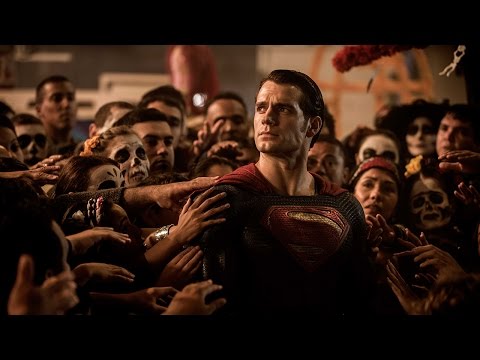
To wit, the recent firing by DC Studios of creative honcho James Gunn. Gunn earned his comic book bona fides helming three fantastic Marvel Cinematic Universe films (“Guardians of the Galaxy Vol. 1,” which remains my favorite MCU flick, its just-okay sequel, Vol. 2, and the excellent Vol. 3).

He moved on to DC to fix the smoking craters left behind by Zack Snyder.

(I’m not a Snyder Bro, but I loved the aesthetic he brought to DC).
YouTube Video

On the surface, this seemed a perfect match. But to those of us who paid attention to such things, there were concerns about how he would handle such mainstream characters as Superman and Batman when he so clearly loved dwelling in the world of D-listers like the aforementioned GotG and Z-listers like Peacemaker and Polka Dot Man.

Right on cue, he kicked off the new DCU with an animated series no one asked for (the stupendous “Creature Commandos”), turned Superman into a supporting character in his own movie and made the bizarre decision to follow THAT with “Supergirl” (C-list, at best) and “Clayface” (a third-tier Batman villain that normie-norms had no idea was a Batman villain).

YouTube Video

It was always going to be an uphill climb for DC with Marvel cranking out critical and financial hit after hit. Going darker with Snyder seemed a reasonable antidote to the MCU’s (now very tired) quip-iness, but that ended with the tragi-comic circumstances surrounding “Justice League” and lame duck “Aquaman” and “The Flash” movies.

What a whimper.

So, where does DC go from here? Who knows?

There’s still, apparently, Matt Reeves’-now-Steven Soderbergh’s “The Batman II,” which is on pace to come out sometime in mid-2039, and Gunn’s 2027 “Superman: Man of Tomorrow.” Oy. Such a mess.

My take? Put out a “Batman” movie every 2-3 years, team him up with A-and-B-listers, build from there. How would you fix it? Share in the comments below.

MUST-WATCH SHOW OF THE WEEK IF YOU’RE AGED 45-55:

“The Shards” (FX) is an ’80s-set mystery-thriller based on the eponymous book by Bret Easton Ellis. Remember him? “Bright Lights, Big City?” “Less Than Zero?” Iconic ’80s movies based on his novels.

“The Shards” is adapted by Ryan Murphy (is there any FX show not produced by Ryan Murphy?), “The Shards” is extremely gay-coded when it isn’t flat-out being gay (is there any show produced by Ryan Murphy not gay-coded when it’s not being flat-out gay?).

YouTube Video

So if that bothers you, you might want to avoid this. Like The Mighty John Nolte, watching two men kiss gives me the ick, but all of the sexuality here (homo and hetero) is in service of the story. Ellis has made a fictionalized version of himself the main character here, as he and his very close, VERY good-looking circle of friends traverse the pitfalls of senior year 1981; proms, grades and a serial killer.

The central mystery is a slow burn that ratchets up the tension nicely over its nine episodes. My only real issue with the show is that its writers, like the once-beloved-now-forgotten to the ash bin of history “Heroes,” didn’t trust themselves enough to end it.

So we’re left with a cliffhanger to be resolved in a season 2 that may or may not happen. (As of this writing, season 2 has not been confirmed. And “Heroes?” Sylar should have stayed dead.)

But if you’re my age (call it mid-50s), you’ll enjoy the hell out of the music we used to listen to, the clothes we used to wear, the drugs we used to d… I mean the cars we used to drive. They even cast a virtual clone of Cindy Crawford in a lead role; her daughter Kaia Gerber.

Man, it’s tough going through life being that good looking. I speak from experience.

DUH! OF THE WEEK:

For a couple of years I had a Substack, The Undertow, a sort-of continuation of my Exit Zero magazine column that ran in Cape May for 18 years. In it, I chronicled my Hate Watch of HBO’s because I refuse to call it MAX’s “The Pitt.” Oh man… there are few things in life I hate more than “The Pitt.”

1. Cancer.
2. Hangnails.
3. “The Pitt.”

That’s the order in which I hate things.

Somewhere in Hollywood, in the basement of some decrepit mansion, probably built on an old Indian burial ground, lies THE BIG BOOK OF TV PLOTS. One can only access this book by sacrificing 12 puppies at the shrine of Chthulu, and one must never deviate from these plots lest an original idea seep through.

And we can’t have that.

I watched with bemused contempt as it received every possible accolade from the Hollywood Back-Patting Society; BEST SHOW! BEST ACTING! BEST WRITING! BRAVEST USE OF 30-YEAR-OLD TROPES! MOST STUNNINGEST BRAVERY! MOST BRAVELY STUNNINGNESS!

And what have you.

The love fest around this Woke Slop was not surprising. In a world where “Emilia Pérez” can garner 13(!) Oscar nominations, anything is possible. So, sure, give it a bunch of awards. Doesn’t mean it’s any good.

Most amusing? When shows like “The Pitt” lecture us Normal Americans how we’re so racist they have to put riders into their contracts to hire X amount of black/ brown/ gay/ trans/ disabled folx to even qualify for awards season WHEN THEY’RE THE ONES IN CHARGE OF HIRING!

It’s like the NBA and NFL implementing a salary cap to save themselves from themselves. Like, I’m not the one giving a .220-hitting left fielder $35M/ yr. That’s all you, chief. And now a beer at the park costs $27.

Same deal with Hollywood. If you want to hire more black people, just hire more black people. You don’t need a Rooney Rule.

That said, my main criticism was that every episode felt like an old episode of “ER” dressed in a modern skin. Then, as now, racism runs rampant in the medical community. Then, as now, every black woman is a lesbian.

Then, as now, the only treatment available for pregnancy is AN ABORTION RIGHT NOW! And so on.

I Hate Watched it because my wife loved it and, admittedly, the “BABY JANE DOE!” lady is amusing. But, as much as I hate to say, “I told you so,” it appears I am telling you so…

‘THE RAINMAKER’ THUMBNAIL REVIEW:

The Rainmaker on USA Network is a pretty good show. Although the titular protagonist, Rudy Baylor (Milo Callaghan) is (GASP!) a straight white male, he’s pretty much a side character in his own show, as the extremely competent and sexy and don’t-need-no-man female characters orbit around him.

The other white guy is a “wacky” lawyer straight from a ’90s “oh no he dih-in’t” WB sitcom. And I am absolutely certain, without checking, that the character of Jocelyn “Bruiser” Stone, head of the Rainmaker’s law firm, is gender-bent from the source material, a 1995 John Grisham novel.

Go on. Check. I’ll wait here… (I was right, wasn’t I…?)

YouTube Video

But, as network legal dramas go, it’s not terrible. Two episodes into season 2, Callaghan is compelling enough to earn a third episode, but I’m already a little worried; the Big Case this season involves a hyper-precocious 10-year-old kid who is a genius and also a David Blaine-level up-close magician.

So… we shall see. And what is it with all these British actors (Callaghan) playing all these American parts!?! DER TERK ER JERBS!!! (I only knew Callaghan was British from the very-very small part he played in Disney’s extremely entertaining “Rivals.” In fact, forget “The Rainmaker,” “Rivals” is 10x more entertaining.

Sorry for making you read this whole paragraph.)

LASTLY THIS WEEK: I recently recommended to you the wonderful “Doc Martin” (Roku, Acorn+) which I stand by. I also soft-recommended the American remake, “Best Medicine,” based mostly on the strong lead performance of Josh Charles (“Sport Night”).

But I must offer one caveat; in 80+ episodes of “Doc Martin” there were, maybe, three implied sexual encounters among the leads. In 10+ episodes of “Best Medicine,” no one can keep their pants on.

You’ve been warned.

Til next time, may your hits outnumber your misses.

The post HiT or Miss: Why James Gunn’s Exit Was … Inevitable appeared first on Hollywood in Toto.

Read the whole story
gangsterofboats
13 hours ago
reply
Share this story
Delete
Next Page of Stories