 Log in

Capitalism is a system of individualism that recognizes individual rights, and socialism is the system of collectivism, a doctrine that man has no right to live for his own sake, that the fruits of his labor belong to society, that he must serve society and the “collective good.”


This is not a story about a blameless victim. This is a story about ideology so divorced from reality that it sends people into dangerous confrontations apparently unprepared for obvious consequences.

I told you I was going to be posting chapters much more frequently from my book in progress, The Prophet of Causation, a short overview of Ayn Rand’s philosophy. I meant it. I just posted another new one titled, “The Discipline of Causation.”

The “discipline of causation” plays off Rand’s description of the rational man as a “disciple of causation.” In the previous chapter, I wrote about the foundation of ethics, and this chapter is about the nature of virtue, which is what really counts in her philosophy as the “discipline” followed by the “disciple of causation.”
The excerpt I wanted to give you for this newsletter is about the “selfishness of virtue.” Ayn Rand is known, of course, for advocating rational self-interest and even “the virtue of selfishness.” But here I talk about how she also advocated the selfishness of virtue—which, as usual, throws a lot of the usual philosophical categories and assumptions for a loop.
This passage starts by talking about a “larger paradox” in altruist theories.
If the purpose of morality is to “starve the whole of the desires which point to our personal satisfaction,” then the case for virtue is that it will be bad for you. As Rand observed, when people “[grow] up to believe that moral laws bear no relation to the job of living, except as an impediment and threat,” they will “come to believe that actual evils are the practical means of existence.” If you tell people that selfishness is evil, they will conclude that evil is selfish.
Ayn Rand’s view was the opposite. Because she advocated for the virtue of selfishness, she also argued for the selfishness of virtue.
Notice what, concretely, her morality consists of. We have already observed that her ethics requires long-range thinking, principles, and self-discipline. The central role of productiveness in her philosophy means that it also requires work and achievement.
Man’s life, as required by his nature, is not the life of a mindless brute, of a looting thug or a mooching mystic, but the life of a thinking being—not life by means of force or fraud, but life by means of achievement—not survival at any price, since there’s only one price that pays for man’s survival: reason.
…
Rand rejected the pursuit of power over others, but she does offer an alternative vision of human power and greatness. That vision is our power over nature through rational thinking and productive work.
Again, this is projected most powerfully in her fiction, where her heroes are creative thinkers, innovators, and builders. In The Fountainhead, her hero is an architect who is driven by the originality of his artistic vision. In Atlas Shrugged, her heroes run railroads and mines, invent new metal alloys and motors, and discover new scientific laws and philosophical truths.
The title of The Fountainhead conveys her message. It is the self, the “I,” that is the source of thinking, creativity, and the motivation to build. Her case for selfishness depends on her view of the self. Where previous philosophers regarded the self as consisting of brutish, irrational, and destructive urges, Rand saw the self as the rational mind and its power to conceive of new ideas and build new things.
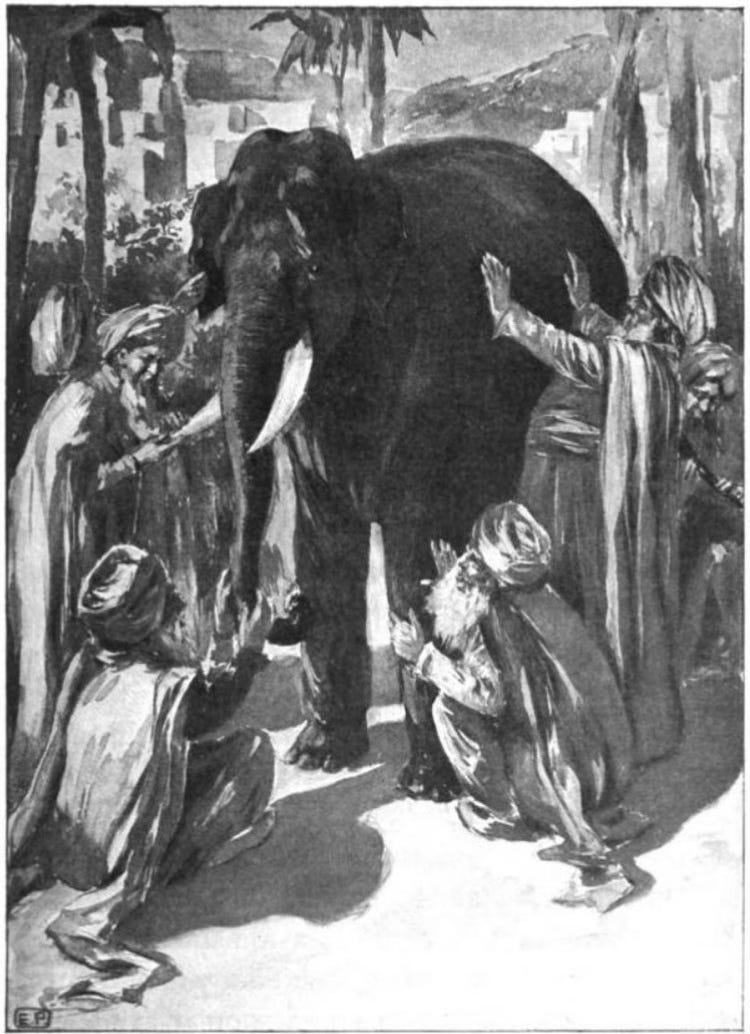
If you’ve subscribed, you can read the whole article. I offer what I think is a very interesting discussion about how the three prevailing theories about the nature of morality are like the old story about the blind men and the elephant.
I’ll have some other updates first in this newsletter, but next up in the book project is my chapter on Ayn Rand’s unique view of the source and meaning of rights.

Good old Plato, he was a hell of a fellow. I’ve been reading up on him, and boy, do we ever need people like the ancient one nowadays. Here he is on self-love, a condition that afflicts most politicians and world leaders since time immemorial: “The greatest of all evils, innate in the souls of […]

It is all too easy to claim analogies with Nazi Germany whenever you want to decry something. All the same, one can’t help thinking of Dr. Mengele and his experiments on children when one reads that a number of prepubertal children in Britain are to be the subject of an experiment in which they will […]



Next Page of Stories