 Log in

The post Let this be the final nail in Labour’s coffin appeared first on spiked.

Universities emphasize diversity, equity, and inclusion over civics—and produce uninformed citizens hostile to free expression.



Foreword to the 25th anniversary edition of Life at the Bottom: The Worldview That Makes the Underclass
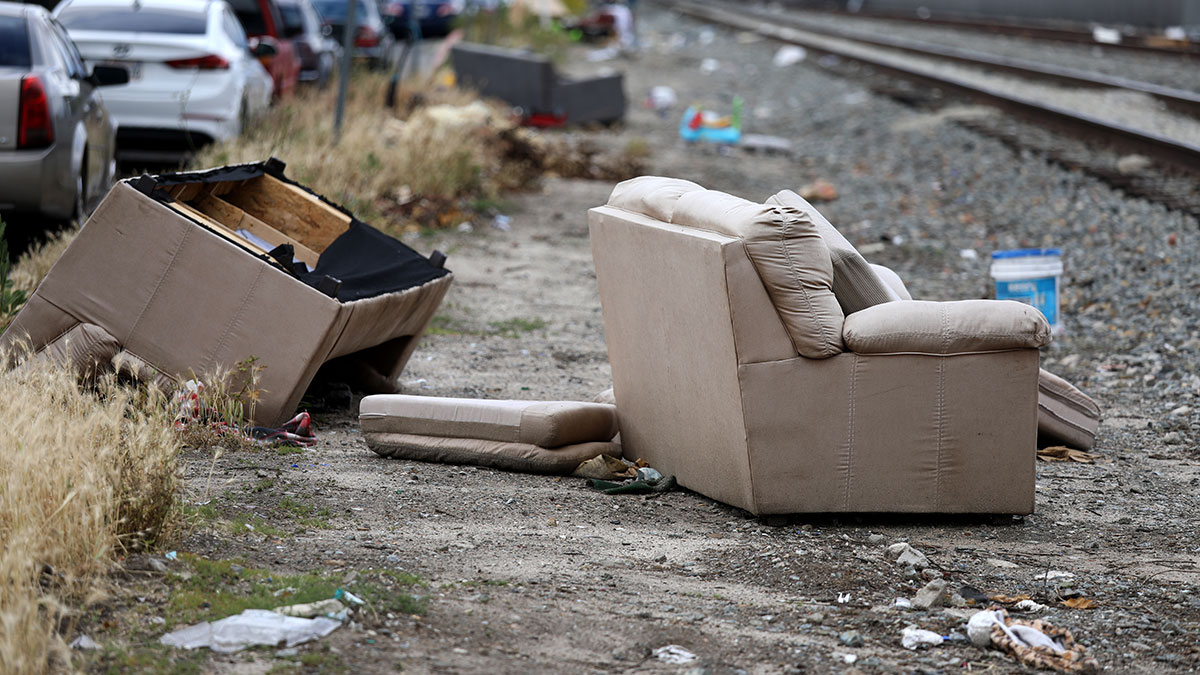

The core of Kelly’s plan is to declare the cost of living a national emergency for 180 days. He would create a new Cost-of-Living Emergency Office inside the president’s Council of Economic Advisers. The chair of the council would then appoint new special advisers to oversee groceries, housing, utilities, health care, transportation and wages.
Those czars would each assemble a task force. They would meet at least once every seven days and prepare a weekly report about costs in their purview. They would also hold regional listening sessions and publish reports about those as well.
The CEA would write a report every three months containing statistics that other government agencies already collect and report on household budgets.
The Office of Information and Regulatory Affairs in the White House would require each agency to prepare a statement about whether new regulations might affect household costs or benefit large corporations.The attorney general and the Federal Trade Commission would form a joint task force to enforce “price-gouging” laws. This task force would also have a mandate to issue lots of reports.
…..
The bill says that the president’s production commands must be supported by empirical data. That’s hardly any comfort. The Soviet economic planning agency, Gosplan, had a massive computer system to process all the data any economic planner could ever want. The problem is the act of central planning in the first place.
With his penchant for taking stakes in companies and unilaterally imposing taxes, Trump already has some of the qualities of an ambitious central planner. That he is the president who would exercise this authority doesn’t seem to trouble Kelly as much as it might other liberals.
Americans would benefit from a politician with a plan to ease cost-of-living concerns who doesn’t think that even more government intervention in the economy is the answer. Clear-cutting a forest to print out stacks of reports no one would read, combined with six months of socialism, won’t do the job.
Financial crises remain a recurrent feature of modern economies despite evidence that many are predictable and preventable. This chapter discusses how financial instability often reflects a political equilibrium rather than purely technocratic shortcomings. Contrasting economic and political perspectives on regulation, the chapter emphasizes how policymakers shape financial rules in ways that favor politically-influential groups but result in financial vulnerability. Key mechanisms include restricted bank chartering, safety nets, credit subsidies, and sovereign borrowing. Political forces also shape crisis management. Delayed interventions, selective support, and constrained policy responses can deepen and prolong crises. Together, these dynamics help explain the persistent and foreseeable nature of financial instability across time, legal origins, political structures, and institutional contexts. Instead of seeing financial crises as arising from an unavoidable vulnerability to external shocks they are better seen as a mirror of the societies in which they occur, reflecting their political structures, vying constituencies, cultural preferences, and blind spots.
One of the most striking features of modern climate economics is not consensus, it’s dispersion. Depending on which paper, model, or administration you consult, the economic damages from climate change range from modest to catastrophic. The “social cost of carbon” alone has swung wildly, from roughly $190 per metric ton of emissions under the Biden administration to effectively zero under Trump.
A new paper by Finbar Curtin and Matthew Burgess, “The Empirically Inscrutable Climate-Economy Relationship,” argues that this dispersion is not a temporary problem awaiting better data or cleverer econometrics. It is, instead, a fundamental and irreducible feature of the enterprise. Their conclusion is uncomfortable: we cannot reliably estimate the macroeconomic damage from climate change using historical data.
…..
If the underlying relationship cannot be reliably identified, then there is no single “correct” social cost of carbon. The wide range of estimates is not a temporary inconvenience but reflects a deep uncertainty that cannot be eliminated with better data or more sophisticated models.
Rather than pretending that we can fine-tune climate policy based on precise damage estimates, we should acknowledge the limits of our knowledge. This pushes us toward a framework of decision-making under deep uncertainty, where robustness, resilience, and flexibility take precedence over point estimates and optimal control.
There’s a broader takeaway here, one that extends beyond climate economics.
Policymakers often demand precise numbers, whether it’s the fiscal multiplier, the elasticity of taxable income, or the social cost of carbon. Economists, in turn, are tempted to provide them, even when the underlying uncertainty is substantial.
Behind the bad design and human error at Chernobyl, a deeper pair of problems was lurking: central planning and totalitarian secrecy.
The Soviet system put economic decisions in the hands of planners far removed from both the data people need to make decisions and the immediate consequences of their actions. Gosplan, the economic planning bureau, initially determined that nuclear power was unnecessary because the country had more than enough fossil fuels to produce electricity. When it became clear in the late 1960s that they had miscalculated, the energy planners rushed the development of nuclear power. In the process, they neglected to include the containment buildings used in the West, which are designed to prevent the escape of radioactive materials even during severe accidents.
Containment, you see, would have increased the costs of the plants by 25 percent to 30 percent. The “leaders of the Soviet energy sector faced a choice between disrupting the Party’s five-year development plan if they built expensive nuclear facilities or abandoning the project altogether,” a group of Russian researchers noted in 2025 (originally in Russian). “Priority was given to the solution that was safe for the officials, but which subsequently created a threat to people’s lives.” After the disaster, an IAEA engineer told the Los Angeles Times that if the Chernobyl reactor had been housed within a standard Western-style containment structure, “it probably would have made a huge difference.” Even if an explosion breached a containment structure, most of the radioactive particles would nevertheless have been trapped.
“Shadow docket” is a pejorative label for the court’s method of deciding whether a government policy may stay in effect while challenges work their way through the system. Such decisions are made on a limited record, without full briefing, argument or final judgment from the lower courts — and, until recently, usually without a written explanation. In another era, the court tended to defer to the executive branch’s judgment of the public interest and to lower courts’ decisions about these matters.
No more. Now the court makes its own judgment about a challenge’s probability of success on the merits and which side is most likely to suffer “irreparable harm” if the underlying policy persists while litigation grinds on. Both halves of that judgment are often contestable. In the “shadow docket” cases that attract attention, the justices often disagree with lower court judges — or, very often, among themselves.
…..
Many shadow docket decisions are subject to legitimate criticism, but the wholesale condemnation of the practice is misguided. Such cases are driven by the practical reality that it takes months if not years for a case to wend its way through the judiciary. Whether a policy is implemented while the case is litigated is often the whole ballgame. By the time it gets to the Supreme Court, the harm is already done.
The post Some Links appeared first on Cafe Hayek.
For every $100 billion increase in the trade deficit since 1975, U.S. household wealth has increased by an average of $76,000. In fact, inflation-adjusted average household net worth has climbed from $336,508 in 1975 to more than $1 million today. Household net worth is also 140 percent higher than it was when the North American Free Trade Agreement took effect in 1994, and 70 percent higher than when China joined the World Trade Organization in 2001.
…..
Fifty years of trade deficits have not drained the United States of wealth or mortgaged its future to foreigners. Rather, by bringing trillions of dollars of foreign investment capital to the nation’s shores, they have enriched it. That’s an economic outcome to celebrate, not one to condemn or correct.
The post Celebrating a Half-Century of U.S. Trade ‘Deficits’ appeared first on Cafe Hayek.
Here’s a letter to a reader who sent to me John Tamny’s latest essay on deficit financing of government spending.
Mr. L__:
Thanks for passing along John Tamny’s latest piece on government debt.
I’ve already shared, many times, my reasons for disagreeing with John’s obliviousness to the dangers of deficit financing of government spending. Nothing that he writes here changes my mind – just as, I’m sure, nothing that I might repeat would change his.
Like Paul Krugman and other Keynesians, John commits a kind of aggregation fallacy when he writes that “unless Americans were already excessively taxed … there’s no way Treasury could borrow as it does.” John here mistakenly assumes that the U.S. government is the American people – or, rather, that the American people’s incomes and assets are property of the U.S. government, much as a corporation’s income and assets are property of that corporation. Just as Acme Corp.’s anticipated income and asset values serve as security for Acme’s debt, the American people’s incomes and asset values, in John’s view, serve as security for U.S. government debt.
The tiny kernel of truth in John’s theory is that the U.S. government does indeed operate under this assumption, and its creditors take that operation to heart when they buy its bonds. But operating on this assumption leads to ill-consequences to which John is blind.
Shareholders of a private corporation that borrows excessively and spends foolishly are nevertheless ethically responsible for that corporation’s debt – both because they voluntarily purchased those shares and because they can easily sell those shares if they wish. Americans’ relationship to the U.S. government is categorically different. Americans do not voluntarily purchase shares in that government and, crucially, unlike corporate shareholders who can sell shares, Americans have no practical way to escape the debt burdens imposed on them by imprudent government borrowing.
John’s Pollyanna-ish opinion of deficit financing rests on the continued willingness of creditors to lend on easy terms to the U.S. government despite that government’s enormous indebtedness. John takes this willingness as evidence that continued government borrowing poses no problem for the American people. But in fact the continued willingness of creditors to lend to the U.S. government is due chiefly to the fact that, unlike a private corporation, the U.S. government can unilaterally seize ever-larger chunks of Americans’ incomes, either through direct taxation or inflation.
And this ample ability of government officials to unilaterally seize other people’s incomes in order to pay for what those officials fancy means that – also unlike a private corporation – government officials practically spend too much because deficit financing enables them to spend other people’s money without the people from whom that money is seized having any real say in the matter.
It’s dismayingly ironic that the individualist John Tamny treats the property of the American people as property of the U.S. government.
Sincerely,
Donald J. Boudreaux
Professor of Economics
and
Martha and Nelson Getchell Chair for the Study of Free Market Capitalism at the Mercatus Center
George Mason University
Fairfax, VA 22030
The post Tamny Is Mislead On Government Debt by a Collectivist Assumption appeared first on Cafe Hayek.
Next Page of Stories