71677 stories
·
2 followers

What Seamus Milne wrote in the Guardian on September 13th, 2001

1 Share

“They can’t see why they are hated” wrote Seamus Milne two days after the 9/11 attacks.

Nearly two days after the horrific suicide attacks on civilian workers in New York and Washington, it has become painfully clear that most Americans simply don’t get it. From the president to passersby on the streets, the message seems to be the same: this is an inexplicable assault on freedom and democracy, which must be answered with overwhelming force – just as soon as someone can construct a credible account of who was actually responsible.

Shock, rage and grief there has been aplenty. But any glimmer of recognition of why people might have been driven to carry out such atrocities, sacrificing their own lives in the process – or why the United States is hated with such bitterness, not only in Arab and Muslim countries, but across the developing world – seems almost entirely absent. Perhaps it is too much to hope that, as rescue workers struggle to pull firefighters from the rubble, any but a small minority might make the connection between what has been visited upon them and what their government has visited upon large parts of the world.

But make that connection they must, if such tragedies are not to be repeated, potentially with even more devastating consequences. US political leaders are doing their people no favours by reinforcing popular ignorance with self-referential rhetoric. And the echoing chorus of Tony Blair, whose determination to bind Britain ever closer to US foreign policy ratchets up the threat to our own cities, will only fuel anti-western sentiment. So will calls for the defence of “civilisation”, with its overtones of Samuel Huntington’s poisonous theories of post-cold war confrontation between the west and Islam, heightening perceptions of racism and hypocrisy.

As Mahatma Gandhi famously remarked when asked his opinion of western civilisation, it would be a good idea. Since George Bush’s father inaugurated his new world order a decade ago, the US, supported by its British ally, bestrides the world like a colossus. Unconstrained by any superpower rival or system of global governance, the US giant has rewritten the global financial and trading system in its own interest; ripped up a string of treaties it finds inconvenient; sent troops to every corner of the globe; bombed Afghanistan, Sudan, Yugoslavia and Iraq without troubling the United Nations; maintained a string of murderous embargos against recalcitrant regimes; and recklessly thrown its weight behind Israel’s 34-year illegal military occupation of the West Bank and Gaza as the Palestinian intifada rages.

Gaza, eh? Plus ça change, plus c’est la même chose.

Seamus Milne continued as a Guardian columnist for another fifteen years until he left to become Executive Director of Strategy and Communications for the Labour Party under its then-leader Jeremy Corbyn. In all that time I never once saw him recommend that Palestinians, or Muslims more generally, or anyone other than Westerners should ask themselves why they are hated.

Read the whole story
gangsterofboats
1 minute ago
reply
Share this story
Delete

Samizdata quote of the day – How the police eats its own

1 Share

Police professional standards departments, detecting the mood music, react accordingly. The Police Federation has pointed out how, from 2022-2025, 100 police officers and staff died of suicide — partly attributable to heavy-handed internal investigations. Then there’s the roll-call of officers thrown under the bus for political expediency — like Pc Lorne Castle, who had the temerity to call a knife-wielding male suspect “a bitch”, Sergeant Rhodri Davies, accused of using disproportionate force against a 6’7” prisoner in custody, or Pc Matthew Pike, charged with causing death by dangerous driving (it was the suspect he was chasing who was driving dangerously, as a jury later found).

Then, if criminal “remedies” fail, the Independent Office for Police Conduct gets a second bite of the cherry by pursuing officers for professional misconduct. Compare such cases with that of the former West Midlands Police chief, Craig Guildford — found to have not only constructed a bogus intelligence case against Israeli football fans, but misled Parliament too. Operational officers go under the prosecutorial bus. Senior cops have “teachable moments”, after which they quietly retire.

Dominic Adler

Read the whole story
gangsterofboats
1 minute ago
reply
Share this story
Delete

Samizdata quote of the day – A state that cannot protect its borders cannot protect its welfare state either

1 Share

Oddly enough, Labour governments understand incentives perfectly well when trying to make us stop smoking, or encouraging us to buy electric cars and install heat pumps. But suggest that incentives might also influence migration, however, and the concept suddenly becomes bafflingly controversial.

Neil Davenport

Read the whole story
gangsterofboats
2 minutes ago
reply
Share this story
Delete

The Crony Capitalists Who Financed the Bolshevik Revolution

1 Share

Lenin wrote that the capitalists would provide the rope by which they would hang themselves. That certainly seems to be the case with the Bolshevik Revolution of 1917, which received strong financial help from the center of crony capitalism itself: Wall Street.

Read the whole story
gangsterofboats
3 minutes ago
reply
Share this story
Delete

The AI "Threat" is Replacing Covid and "Global Warming"

1 Share

Get ready to hear a lot about how we need government regulation to ensure that only state-approved, expensive, crony "capitalist" firms are allowed to develop AI.

Read the whole story
gangsterofboats
4 minutes ago
reply
Share this story
Delete

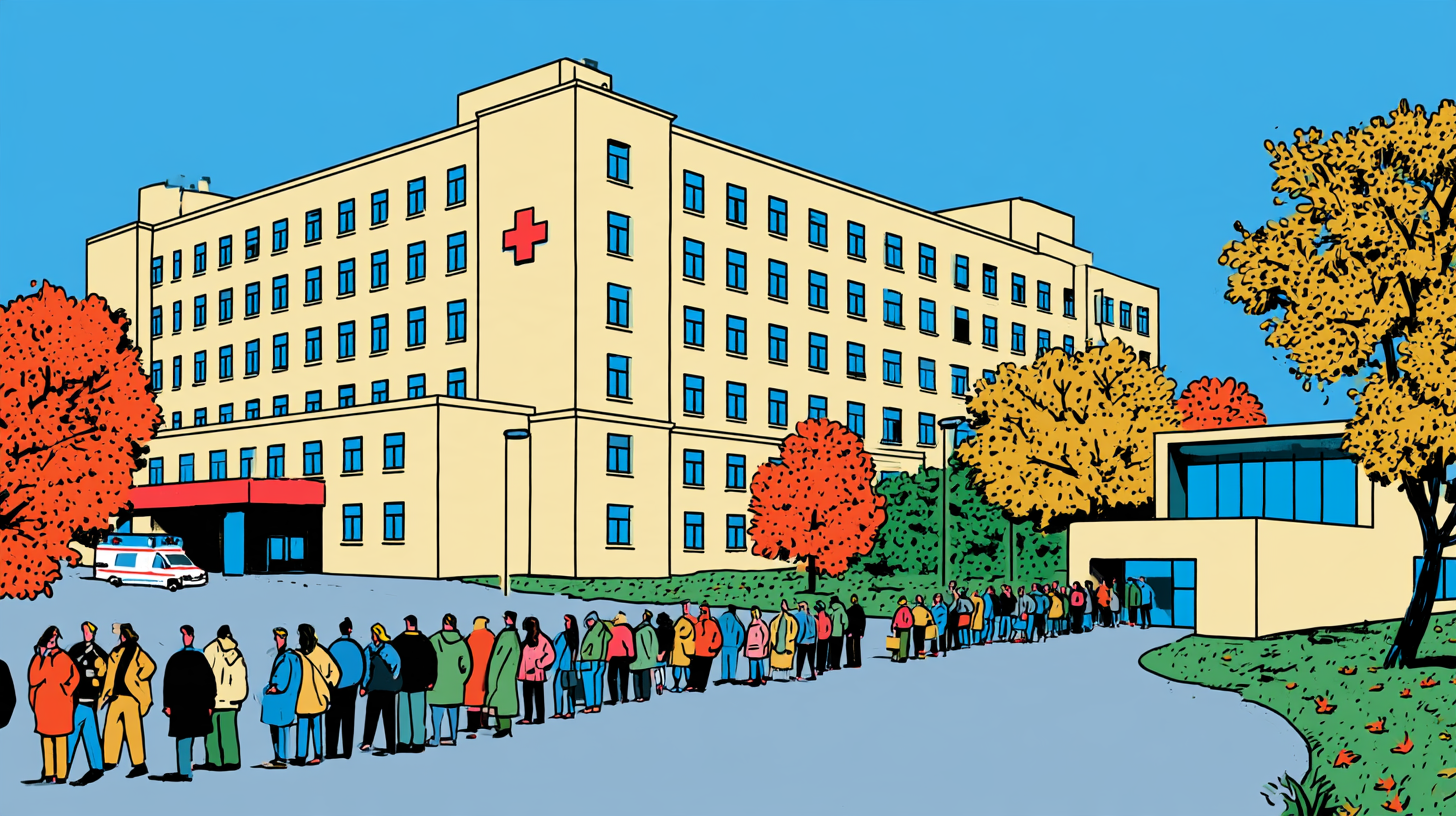
The Failure of Europe’s Single-Payer Health Monopoly

1 Share

American progressives continue to advocate for a Medicare for All system, pointing to the Old Continent as a utopian model of universal access to health care. However, in Europe, systems in which the state functions as both direct provider and single-payer monopolist continue to fail.

Contrary to the narrative pushed by certain political circles, Europeans are increasingly adopting private health insurance. The structural flaws in countries that double down on centralized, state-run models show notable consistencies: swelling waiting lists, health care professionals fleeing a public sector constrained by rigid salary scales, and a systemic inability to allocate resources where they are needed most.

In the United Kingdom, whose famous National Health Service (NHS) served as the inspiration for public systems across Europe, roughly 71% of adults now say they would consider using private health care. Meanwhile, more than half of adults aged 35 to 44 expect to do so within the next year, a direct result of record-breaking waiting lists. In England, there are about 7 million people waiting for hospital treatment. The statutory promise of treatment within 18 weeks has failed consistently since 2016, and more than a third of emergency room patients wait more than four hours, a delay linked to estimates of over 1,300 excess deaths per month.

In Sweden, a country steeped in social-democratic tradition, over 826,000 citizens, roughly 8% of the population, hold private health insurance to bypass the sluggishness of a taxpayer-funded system.

In Portugal, a country with below-average European incomes where the tax burden on families is among the highest in the EU relative to earnings, the recurring closure of emergency rooms and maternity wards has driven more than 35% of the population to obtain private insurance. Despite financial difficulties, many families pay out of pocket simply to secure basic care.

This health care model, the Beveridge model, operates as a state monopoly. In doing so, central planning demonstrates that removing price mechanisms does not eliminate scarcity; it merely rations care through waiting lists and administrative bureaucracy.

There is another health care system in Europe, the Bismarck model, adopted by nations such as the Netherlands and Germany. Although based on mandatory social insurance, Bismarck systems achieve superior access by fostering competition between public and private providers, granting patients greater freedom of choice while preserving universal coverage. In the Netherlands, basic insurance is purchased from competing private insurers. In Germany, patients can freely choose their sickness fund and physician. According to recent data, only 0.3% of Dutch patients and 0.6% of German patients go without care due to waiting lists.

In Bismarckian systems, long-term sustainability depends on private complementarity to prevent capacity bottlenecks. However, in countries that cling to the rigidity of the Beveridge model, the practical result is double taxation: Europeans end up paying for health care twice, first through heavy taxes to fund a public service that fails to treat them in time, and second out of their own pockets through private insurance.

In practice, the state monopoly’s own utopian promise is what drives citizens into the free market. The growth of Europe’s private health care sector is not an ideological assault on the social safety net, but rather an inevitable consequence of its structural limitations.

As ideologues and lawmakers in Washington continue to present single-payer state financing as a progressive solution, Europe’s real-world evidence offers an economic lesson: scarcity does not disappear by banning the market; it merely changes shape. When the state assumes a financing monopoly, resource allocation ceases to respond to actual patient demand and is instead managed by budgetary and administrative criteria, with negative results not only for health but also for overall economic productivity.

The expansion of the private sector in Europe is the result of a practical necessity. Turning to private care after already paying high taxes is the way millions of families attempt to protect their health when the public system subjects them to months of waiting.

The United States of America should reinforce what Europe is only now beginning to rediscover: competition and freedom of choice remain the best guarantees of access, efficiency, and quality.

Read the whole story
gangsterofboats
59 minutes ago
reply
Share this story
Delete
Next Page of Stories