68616 stories
·
3 followers

The Warmth of Collectivism

1 Share
“Replace the frigidity of rugged individualism with the warmth of collectivism!” says my new socialist mayor. Sounds so nice … No more greedy capitalists hoarding wealth. People share. It’s the socialist dream. What will replace capitalism and individualism? One model is the commune – that socialist system where people share, rather than greedily chasing money. […]

Read the whole story
gangsterofboats
2 minutes ago
reply
Share this story
Delete

Britain’s bid to police the world’s internet

1 Share

The post Britain’s bid to police the world’s internet appeared first on spiked.

Read the whole story
gangsterofboats
3 minutes ago
reply
Share this story
Delete

Why are groceries so expensive in NYC?

1 Share

The lowest-hanging fruit is to simply legalize selling groceries in more of the city. The most egregious planning barrier is that grocery stores over 10,000 square feet are not generally allowed as-of-right in so-called “M” districts, which are the easiest places to find sites large enough to accommodate the large stores that national grocers are used to. Many of these districts are mapped in places that are not what people have in mind when they think “industrial” — mixed-use neighborhoods with lots of housing like stretches of Williamsburg’s Bedford Avenue and almost all of Gowanus, even post-rezoning, are in fact mapped as industrial districts.

To open a full-sized grocery store in these areas, a developer must seek a “special permit,” which requires the full City Council to get together and vote for an exception to the rules. This is a long, uncertain process, and has in the past even been an invitation to corruption.

Most famously, the City Council uses this power to keep out Walmart at the behest of unions and community groups. Thwarted in its plans to open a store in East New York — a low-income Brooklyn neighborhood that could desperately use more grocery options — the nation’s largest grocer instead serves New Yorkers with a store just beyond the Queens/Nassau line in Valley Stream, rumored to be the busiest Walmart in the country. New Yorkers with a car and the willingness to schlep beyond city limits — or pay the Instacart premium — get access to cheaper groceries; the rest get locked out.

When politicians are willing to approve a grocery store, the price can be high.

That is by Stephen Smith, via Josh Barro.

The post Why are groceries so expensive in NYC? appeared first on Marginal REVOLUTION.

Read the whole story
gangsterofboats
8 minutes ago
reply
Share this story
Delete

AI and the Art of Judgment

1 Share

A New York magazine article titled “Everyone Is Cheating Their Way Through College” made the rounds in mid-2025. I think about it often, and especially when I get targeted ads that are basically variations on “if you use our AI tool, you’ll be able to cheat without getting caught.” Suffice it to say it’s dispiriting.

But the problem is not that students are “using AI.” I “use AI,” and it’s something everyone needs to learn how to do. The problem arises when students represent AI’s work as their own.  At a fundamental level, the question of academic integrity and the use of artificial intelligence in higher education is not technological. It’s ethical. 

I love generative artificial intelligence and use it for many, many things. Workouts. Recipes. Outlining and revising articles and lectures. Multiple-choice questions. Getting the code I need to tell R to turn a spreadsheet into a bunch of graphs. Tracking down citations. And much more.  The possibilities are endless. Used wisely, it multiplies productivity. Used foolishly, it multiplies folly. Debates about academic integrity and artificial intelligence force us to really reckon with who we are and what we’re doing.

The debate has split into unhelpful camps. One compares AI to a calculator. Another sees AI as the end of human thought. Both miss the point. The “just a calculator” crowd ignores how calculators and related software tools, as useful as they are, have relieved us of many of the burdens that come with thinking quantitatively. “It’s just like a calculator” is (kind of) true, but it’s not reassuring. Knowing which buttons to press to make a parabola appear is not the same thing as knowing what a parabola actually is and why it’s meaningful. The “end of thought” crowd ignores how generative AI is a powerful tool that can be used wisely. Is it an assistant? That’s great. Is it a substitute? That’s not.

The problem, though, is not the tool. It’s the user. People can use AI wisely or wickedly, just like they can any other tool. In the hands of Manly Dan from Gravity Falls or Paul Bunyan, an axe is a tool used to fell trees and provide shelter. In the hands of Jason Voorhees from the Friday the 13th horror franchise, it’s a tool for something else entirely.

In 2023, just as we were meeting and getting to know our new AI overlords, I wrote an article responding to the cynical student asking, “when am I ever gonna use this?” about the humanities and other studies that aren’t strictly vocational. My answer was (and is) “literally every time you make a decision.” Why? The decisions you make are a product of the person you are, and the person you are is shaped by the company you keep. Studying history, philosophy, literature, economics, and the liberal arts more generally is an exercise in keeping good company and becoming a certain kind of person: one who has spent sufficient time grappling with the best that has ever been thought and written to be trusted with important decisions. It is to become a person who has cultivated the art of judgment.

It’s an art we can practice poorly in a world where it’s trivially easy to outsource our thinking to ChatGPT and Gemini. Here’s an analogy. If you’ve never seen the movie Aliens, drop everything and watch it. It’s a classic among classics. If you have seen it, consider the end of the movie, when Sigourney Weaver’s character, Ellen Ripley, dons a P-5000 power loader suit to defeat the alien queen. She uses a tool that amplifies her strength, enabling her to accomplish what would otherwise be impossible.

The way many students use AI is much like wearing Ripley’s power loader suit to the gym. You might be able to “lift” 5000 pounds in the power loader suit, but it’s a mistake to think the suit is making you any stronger, a laughable self-deception to think you could lift 5000 pounds without it, and a laughable lie to anyone you’re trying to deceive into thinking you can lift 5000 pounds. When you hand in work that’s mostly AI-generated, you’re not building muscle, learning to lift, or getting stronger. You’re racking up huge numbers while your muscles atrophy.

Sometimes, of course, using AI is like having a spotter when you’re doing squats or bench press. I use AI in the gym as a trainer of sorts that tells me which exercise to do next. That’s one way to use AI, but the way too many students use AI is like going to the gym and having the AI tool–the power loader suit–lift the weights for me.

Tools like ChatGPT, Gemini, Grok, and Claude should free up our time and energy to do higher-order work, not hide the fact that we can’t. Technology has made me significantly more productive: I dictated the original version of this essay into Google Docs on my phone using wireless earbuds, and then revised it using Gemini and Grammarly. What’s the difference between that and submitting AI-generated work? Using dictation tools and AI to generate and clean up an essay like this is like using Ripley’s power loader to move heavy stuff. Using AI to create text and trying to pass it off as your own is like using Ripley’s power loader suit to fake a workout.


I thank ChatGPT, Gemini, Grammarly Pro, and GPTZero.me for editorial assistance.

The post AI and the Art of Judgment appeared first on Econlib.

Read the whole story
gangsterofboats
9 minutes ago
reply
Share this story
Delete

What is Competition?

1 Share

Economists extol the importance of competition in markets for driving prices down and quality up. But what is “competition” and how does it actually work? 

To non-economists, the word conjures the idea of something like a sporting contest, where there can be one winner while everyone else loses. But this comparison fails on at least two dimensions.

First, for there to be a single “winner” in a market exchange would require there to be a single, identical good that each competitor is trying to provide, vying for scarce consumer dollars. This is a fine thought-experiment for the classroom, textbooks, and academic papers. But that is not how market exchanges really work, even for any particular good. While it is true that important lessons can be learned from these abstractions and thought experiments, go ahead and tell someone with discerning taste that Coke, Pepsi, and RC Cola are “basically the same” and let me know their reaction.

Second, a single winner, many losers scenario would also imply that if the number of competitors were increased, competition itself would increase. After all, winning a world title is far more impressive than winning “just” a national title. But that misses something about how competition works. In a small town with just two hardware stores, “competition” between those two stores can be much more fierce than in a larger city with twenty stores.

So what actually is competition, then?

Recently, my mom and her husband’s furnace went out while they were out of town. In Michigan. In the winter. Since they live just two miles down the road from me, I was the designated emergency contact. The next morning, a technician was on site, diagnosing the problem. (Being a firm believer in specialization, I have no idea what was wrong, only that some part needed replacing.)

Both of us knew that he had me stuck between a rock and a hard place. No other company in town could get this done faster and I wasn’t about to let my mom’s pipes freeze. Despite this, when the bill came, everything was normal. There was a standard fee for parts and labor that was perfectly reasonable and no trace of a markup for an “emergency service” or anything of the sort that, given the circumstances, I would have agreed to.

Why not?

This year marks the 250th anniversary of Adam Smith’s Wealth of Nations, and the furnace repair job illustrates what Smith understood about competition. It’s not about the textbook definition of identical firms producing identical products, battling over price until (economic) profit is driven to zero. Indeed, Smith wouldn’t have recognized this formal model of perfect competition. But Smith understood, and helped clarify, the fuller insight about how commercial activity shapes behavior over time.

Smith recognized that markets don’t just allocate scarce resources. They cultivate habits of honest dealing. A firm that cheats will likely profit in the short run, but certainly not in the long run. The firm that treats and charges customers honestly builds a reputation, attracts repeat business, and ultimately outlasts the swindler.

Smith referred to this as the “discipline of continuous dealings,” which game theorists have taken to calling “repeated play.” When a firm expects future dealings, either with the same customer or with people that customer talks to, cooperation (not defection) becomes the dominant strategy. This isn’t because people become angels, but because cheaters ultimately get punished when their market counterparts do business with someone else instead.

The furnace technician operates in a world of Yelp, Google Reviews, and social media. The company has been in business for decades at this point and (presumably) plans to be in business for many more to come. Every service call that the technician makes is part of his “continued dealing,” and he plays accordingly.

This completely transforms how we should think about things like “market power.” The standard story says that when a seller faces a buyer with no realistic alternatives, exploitation follows. Sometimes it does. But more often than not, we find honest dealings instead. Competitive markets create pressures that persist even in temporarily non-competitive moments. The company that gouges today will face competition tomorrow, and its reputation will follow.

“Competition,” then, isn’t really about the number of rivals at any one moment. It’s about the ongoing possibility of rivalry, and the understanding that customers can leave, that alternatives exist or could emerge, and that word of good or bad behavior spreads. These possibilities discipline market transactions so consistently that fair dealing becomes virtually automatic.

Two hundred and fifty years after Smith wrote, his insight remains underappreciated. Markets are not just mechanisms for setting prices. They also shape behavior by rewarding fairness and cooperation. By doing so, they can make ordinary self-interest look remarkably similar to virtue.

My mom’s pipes didn’t freeze. The repair company earned a loyal customer. If told this story, Adam Smith would probably take a sip of his claret and nod.

The post What is Competition? appeared first on Econlib.

Read the whole story
gangsterofboats
10 minutes ago
reply
Share this story
Delete

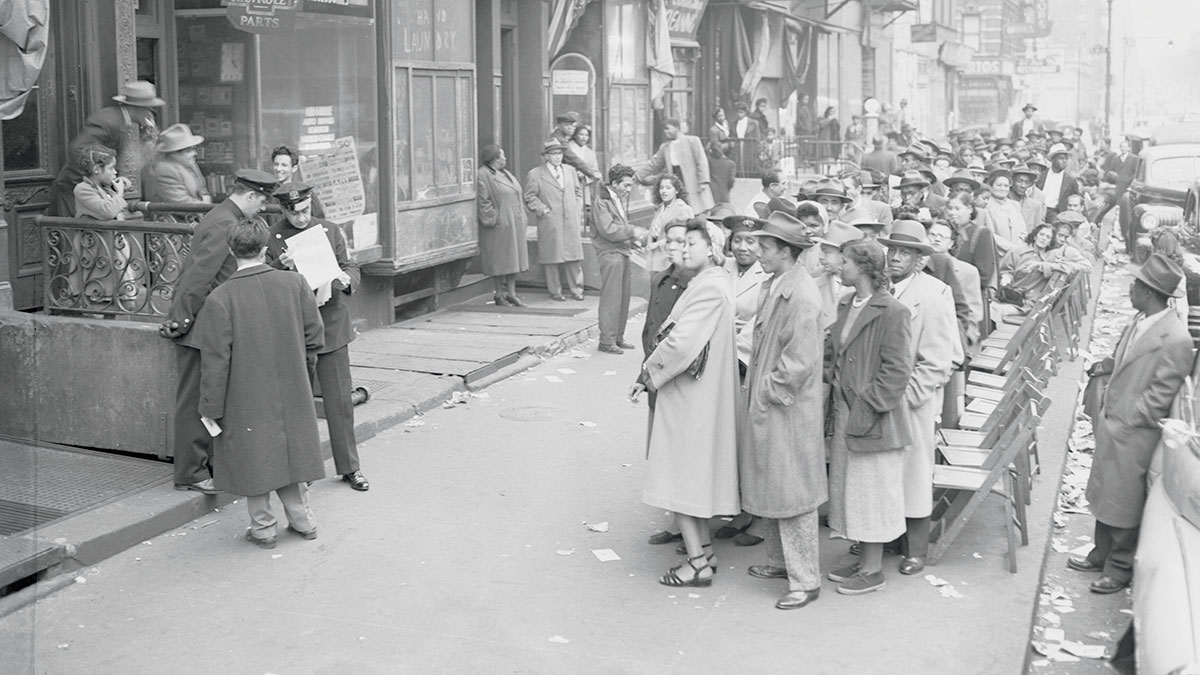
A Look Back at New York City’s First Flirtation with Socialism

1 Share
Before Zohran Mamdani and the Democratic Socialists of America, there were Vito Marcantonio and the American Labor Party.

Read the whole story
gangsterofboats
1 hour ago
reply
Share this story
Delete
Next Page of Stories