 Log in

“The more big and active the state is, the more it is worth purchasing.”
– Deidre N McCloskey and Alberto Mingardi, The Myth of the Entrepreneurial State (page 97).
“The more big and active the state is, the more it is worth purchasing.”
– Deidre N McCloskey and Alberto Mingardi, The Myth of the Entrepreneurial State (page 97).


The post The dystopia of a world without growth appeared first on spiked.
The post Britain needs an air-con revolution appeared first on spiked.
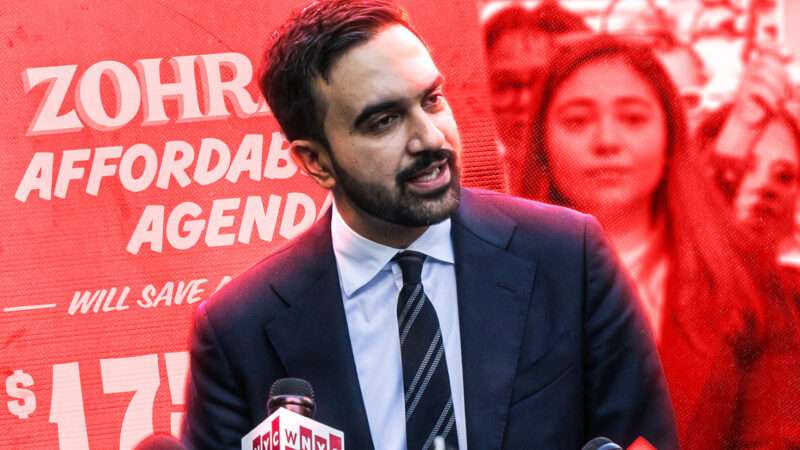
Two days after three of New York City Mayor Zohran Mamdani's endorsed congressional candidates won their elections in the New York primaries, the NYC Rent Guidelines Board (RGB) delivered another win for the mayor.
On Thursday night, the board voted 7–1 to freeze the rent for 1 million apartments in the city. The rent freeze applies to both one- and two-year leases, and prevents rent increases for more than 40 percent of apartments in the city, reports The New York Times. Those apartments that are covered by the freeze include "high-rise luxury apartments, deeply affordable subsidized units and 150-year-old walk-ups," according to the Times.
Freezing the rent was one of Mamdani's key campaign promises (remember this?), and one that depended on support from the RGB, which is now largely filled with Mamdani's appointees.
New York University Stern School of Business professor Arpit Gupta was the lone dissenting vote. On Thursday, he outlined his opposition to the rental freeze in City Journal, warning that "freezing the price of a service indefinitely while its costs continue to rise does not produce cheap or abundant service. Instead, it produces deteriorating assets and, eventually, public bailouts and takeovers."
Although Mamdani claims rental freezes ensure affordability, Gupta argued these measures benefit New Yorkers based on luck, not need.
"The protection offered by a stabilized lease is effectively a transferable property right, one that can be held for life and, in practice, is often passed down to other family members," he wrote. "A rent freeze increases the value of that right, turning the benefit into something closer to a lottery prize than targeted welfare assistance."
Mamdani's rent freeze is the first to apply to two-year leases, but the city has frozen rent for one-year leases before under Mayor Bill de Blasio in 2015, 2016, and in 2020. During this time, however, Reason Foundation—the nonprofit that publishes this magazine—noted that the freeze "widened the gap between operating expenses (such as taxes, insurance, and fuel) and allowable rents," especially for small property owners of older buildings.
"From an economic theory perspective, these freezes functioned as binding price ceilings, protecting existing tenants in the short run but discouraging investment in rental properties and reducing landlords' incentives to keep stabilized units in active use," wrote Reason policy analyst Jen Sidorova last year. "That left fewer homes available, so more people had to compete for the unregulated, 'market-rate' apartments, the ones not covered by rent limits, driving those rents even higher."
Mamdani's freeze is expected to face a legal challenge, reports the Associated Press, especially after the board member representing landlords, Christina Smyth, resigned the day of the vote. In her resignation letter, she wrote that the board, which is supposed to act independently, had "stopped being a fact-finding body" and that "this year's RGB order was decided last year on the campaign trail."
New York's rent freezes have faced legal opposition before. In 2016, the Rent Stabilization Association, which represented landlords, sued over de Blasio's rent freeze, claiming the board was politically motivated. A Manhattan judge dismissed the lawsuit a year later. A lawsuit challenging Mamdani's freeze could come from a group like the New York Apartment Association, which represents rent-stabilized landlords, reported The Real Deal. In May, the association's executive vice president, Jay Martin, told the outlet that the group is "exploring all legal options."
Without a successful legal challenge, the freeze would take effect on October 1 of this year and continue until September 30, 2027. For those lucky to live in rent-stabilized apartments, the freeze may seem like a temporary win. But in a city that ultimately needs to increase the supply of housing to meet demand, the freeze will fail to make New York housing more affordable in the long run.
The post Mamdani Got His Rent Freeze Wish. Don't Expect New York City Housing To Become More Affordable. appeared first on Reason.com.


“Supergirl” is a dud.
The film earned a mediocre 57 percent at Rotten Tomatoes, but the bad reviews are scathing and the raves are anything but.
There’s more.
No box office prediction has the film in the winner’s circle. Yet both Deadline and The Hollywood Reporter are downplaying the film’s lackluster start.
Hmmmm.

First, Deadline.
The far-Left outlet highlights the film’s global box office debut, not its stateside numbers in its headline.
‘Supergirl’ Takes Off With $13M First Day At Global Box Office
That’s not how it typically captures a film’s first-day ticket sales.
Hmmmm.
The story compares the opening to Steven Spielberg’s summer film “Disclosure Day.” Why not compare it to other superhero films out of the gate?
Hmmmm.
RELATED: ‘SUPERGIRL’ ADOPTS INSANE ‘GHOSTBUSTERS’ STRATEGY
The site does later do just that, but it does so by adding the film’s Wednesday preview numbers with its Thursday figures. That allowed it to fly, albeit barely, past other super duds like “The Marvels” and “Black Adam.”
Those releases didn’t have an extra day’s worth of ticket sales, though.
The Hollywood Reporter’s box office update has arguably the worst story lede you’ll ever find.
Supergirl has begun its box office run.
Talk about compelling. We simply MUST read more!
RELATED: JAMES GUNN TRASHES MAGA, PRAISES CHINA
The far-Left Variety update, to its credit, has more data and reflects the uphill battle “Supergirl” faces to turn a profit.
Meanwhile, more neutral film observers shared some hard truths for the DC film.
#Supergirl kicked off its domestic release with $7.8M from pre-shows held on THU + WED.
Full opening day headed to high teens, well below $24.1M of The Flash from JUN 2023.
Opening wknd #boxoffice headed to below $46.1M of The Marvels and near Morbius territory of $39M. pic.twitter.com/gcIgOIYuXq
— Gitesh Pandya (@GiteshPandya) June 26, 2026
Last year, SUPERMAN flew off with $22M in previews and $125M over the weekend.
SUPERGIRL–a $170M+ production–was grounded with $7.8M in previews, and could see an opening of $44M this weekend.
— Exhibitor Relations Co. (@ERCboxoffice) June 26, 2026
World of Reel doubled down on that sentiment.
Gillespie’s DCU movie earned just $6M in Thursday previews. Including previous advance showings, it has made $7.8M so far….What started as a projected $65M opening weekend in June is now looking more like a three-day tally in the $39M range.
Just tell it like it is. That’s all we ask.
Not all summer blockbusters get rave reviews. If “Supergirl” earned tepid critiques but over-performed at the box office, so be it. And a few films will start small and grow, and grow, over time.
Just ask the team behind “Obsession” how that works.
So “Supergirl” can still rewrite its own story if word-of-mouth traffic kicks in.
Either way, it’s apparently hard for some news outlets to share the sometimes ugly truth.
The post Is Media Running Cover for ‘Supergirl’s’ Box Office Numbers? appeared first on Hollywood in Toto.


